Novosibirsk compresses excavation risk into a short construction season. For contractors working around the Ob River, Akademgorodok, Tolmachevo logistics corridors and dense Soviet-era utility networks, the most valuable systems are those that reduce surface disruption, improve alignment accuracy and support rapid mobilisation. The four systems below are a practical first review set for tunnel, utility, marine and sewer work. Each product URL is preserved so procurement teams can move directly from search intent to a technical RFQ.
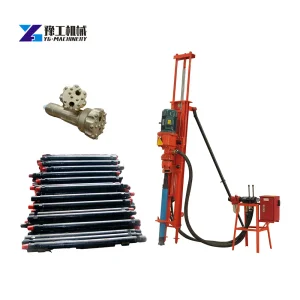
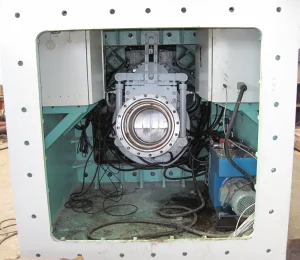
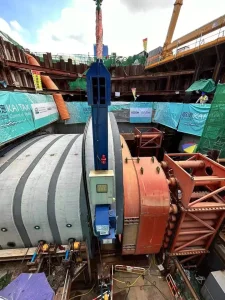
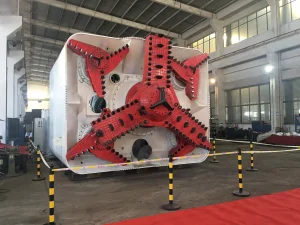
Novosibirsk is not a generic Russian destination for construction equipment. It is the largest city in Asian Russia, a scientific and educational centre, a rail and logistics gateway, and an industrial hub with a legacy utility network. That combination creates a specific procurement profile: high-consequence work near live services, short weather windows, strict site safety expectations and a need for documentation that can survive tender review.
Severe continental winters and seasonal frost can narrow the working calendar. Equipment specification often needs cold-weather hydraulic fluids, heated cabs, pre-heating, battery management and reliable cold starts. Rapid set-up matters as much as maximum output.
Water, sewer, heating, telecom and power networks frequently sit close together. Trenchless pipe jacking, impact moling and modular shoring reduce open-cut exposure and lower the risk of service strikes in inner-city and industrial zones.
Alluvial soils, clay, sand, peat lenses and groundwater conditions demand project-specific cutter heads, jacking force planning and settlement control. A factory quotation should be tied to geotechnical data, not only a generic model number.
Novosibirsk sits on major rail and road routes across Siberia and Central Asia. That makes it a practical consolidation point for project cargo, spare parts strategies and phased deliveries to surrounding construction sites.
Akademgorodok, industrial parks, warehouses, cold-chain facilities and research institutions create demand for precise foundations, monitoring, trenching, rehabilitation and controlled excavation near high-value assets.
For Russian and EAEU import, buyers increasingly expect a traceable technical file: drawings, manuals, safety information, spare parts lists and clarity on applicable conformity routes. Export documentation should be reviewed before purchase order, not after shipment.
High-value excavation procurement rarely begins with a single keyword. It begins with an intent cluster: supplier verification, technical fit, compliance evidence, delivery feasibility and lifetime support. This table maps common search queries to the information a serious exporter should provide.
| Search intent cluster | Typical query pattern | What serious buyers need to see |
|---|---|---|
| Factory verification | precision excavation systems factory for Novosibirsk market | Manufacturing history, annual capacity, R&D team structure, quality management, CE and ISO evidence, product traceability and export references. |
| Export compliance | pipe jacking system exporter Russia EAC documentation | Clear statement of conformity route, technical file support, customs data, Russian-language documentation options and a review process with accredited bodies. |
| Trenchless application fit | trenchless pipe rehabilitation Novosibirsk sewer | Pipe diameter, soil condition, drive length, launch shaft requirements, alignment control, settlement monitoring and rehabilitation method selection. |
| Cold-weather reliability | cold weather hydraulic system supplier Siberia | Low-temperature oil recommendation, pre-heating, heated cab options, seal specification, battery strategy, start-up procedure and winter maintenance schedule. |
| Safety and shoring | trench shoring system for deep utility works | Depth rating, soil class, installation method, tabulated data, lifting points, corrosion protection and compatibility with local safety supervision. |
| Monitoring and data | slope stability inclinometer system civil engineering | Sensor accuracy, data frequency, alarm thresholds, integration with project monitoring plans and support for long-term asset records. |
Information gain matters: a Novosibirsk buyer comparing exporters is not only comparing price. They are checking whether the supplier understands frost, dense services, river-valley soils, Russian-language documentation and the real cost of downtime. A factory that answers those questions with engineering evidence lowers perceived risk before the first call.
Localisation is not a translated brochure. For precision excavation systems, it is a chain of technical decisions that connects the factory configuration to the Novosibirsk site condition, the contractor’s safety system and the buyer’s import compliance process.
Project teams should verify the current EAEU technical regulations applicable to the machine configuration and end use. The exporter can prepare technical descriptions, drawings, declarations and spare parts data to support the importer’s certification and customs workflow.
Operator manuals, safety labels, maintenance schedules and spare parts lists can be prepared for Russian-speaking site teams. Clear documentation reduces commissioning errors and supports tender submissions that require a readable technical dossier.
For winter windows, the technical offer can include low-temperature hydraulic oil, heated operator areas, pre-heat options, battery management, hardened seals and a start-up checklist. The correct package depends on the actual duty cycle and storage conditions.
Novosibirsk projects benefit from a planned spare parts list before shipment: wear parts, seals, filters, cutting tools, hoses and critical sensors. A factory-direct strategy can consolidate spare parts with the main equipment to reduce later air-freight costs.
Where site access is limited, remote commissioning support, video inspection, hydraulic parameter review and operator guidance can shorten the learning curve. Critical projects should still plan for local mechanical support and a clear escalation path.
Shoring, pipe jacking and drilling systems should be introduced with method statements, lifting plans, exclusion zones and operator training. Compliance with local site rules is a shared responsibility between the manufacturer, importer and contractor.
Reliability note: CE and ISO management-system evidence are valuable baselines, but they do not automatically replace Russian or EAEU import conformity requirements. A credible exporter should separate factory quality evidence from market-access certification and tell the buyer exactly which document supports which claim.
A Novosibirsk buyer needs more than a catalogue. They need evidence that the factory has repeatable production, engineering depth, export experience and quality management. The original company profile is preserved below, followed by the supply-chain implications for Siberian projects.
Founded in 1995, Guangzhou Mintrix Excavator Co., Ltd. began specializing in producing excavating machinery in 2003. We currently have an annual production capacity of nearly 20,000 units, offering a range of products that includes medium and small wheel excavators, small crawler excavators, our patented wheel-crawler integrated excavators, dump trucks, and skid steer loaders. Our brands, RHINOCEROS, XINIU, and Kenstone, are synonymous with innovation and quality.
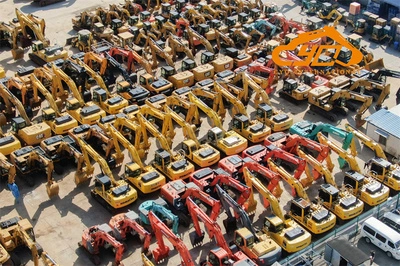
We employ over 600 skilled workers, including a dedicated R&D team of more than 70 professionals. All our products undergo rigorous testing and comply with ISO and CE standards.
Since 2010, we have been actively expanding our international trade business. By 2023, our annual foreign trade sales have reached approximately $70 million. This growth is primarily due to our focus on product development, consistent participation in international engineering machinery exhibitions such as the Canton Fair and Bauma in Germany, and on-site visits to clients to gather first-hand market demand information. Our company leaders and technical sales team have traveled to numerous countries and regions, including Europe, the United States, South America, Central Asia, Southeast Asia, and Africa.
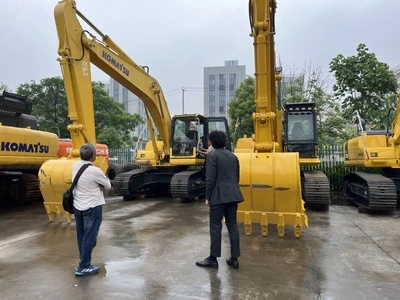
Our R&D personnel are divided into 9 teams, each focusing on developing and improving different models to meet international market needs. For example, in 2014, we were the first to create and produce the first single-cylinder micro excavator in China, which quickly gained popularity in international markets and has been in high demand ever since.
Our company has obtained certifications for quality management, environmental management, occupational health and safety management, intellectual property management, and energy management systems, as well as the DCMM (Level 2) certification. Our products have passed the EU CE certification. We have been recognized as a high-tech enterprise, a provincial manufacturing single champion enterprise, a specialized and new enterprise, and a provincial gazelle enterprise.
For Novosibirsk, this factory profile supports a project-based supply model: select the machine configuration against geotechnical and utility data, consolidate wear parts and critical spares, prepare export documentation, and ship through a route that matches the construction window. The value is not simply a lower unit price; it is shorter coordination loops between engineering, production, export and after-sales support.
Large contractors, utility owners and mining-service companies evaluate excavation systems through a total cost of ownership lens. Price is important, but downtime, documentation, spare parts lead time and safety performance often decide the award. For the Novosibirsk market, these criteria are amplified by distance, winter conditions and the need to coordinate multiple subcontractors.
Pipe diameter, soil class, drive length, groundwater, shaft size and settlement limits should drive the configuration. A lower-cost unit that is mismatched to Ob River valley soils can create far higher project risk.
Procurement teams need a technical file that can be reviewed by engineering, safety, customs and certification specialists. Clear document ownership reduces hold-ups at the border and at site mobilisation.
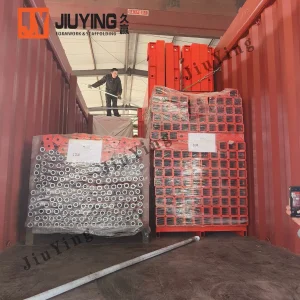
Rail, road and air options each carry different cost and timing trade-offs. Batching main equipment with spare parts and consumables often improves the commercial outcome for Siberian projects.
Wear parts, hydraulic components, cutting tools and filters should be priced as a lifecycle package. A factory-direct quotation can expose the consumable profile early and help avoid budget surprises.
International buyers expect a named technical contact, escalation path and commissioning plan. Local service partners may handle first-line maintenance, while the factory supports complex diagnostics and parts identification.
Drawings, calculations, safety information and product test evidence help contractors defend their method statement to owners, insurers and site supervisors. Documentation is part of the product, not an afterthought.
Several technology shifts are changing how Novosibirsk contractors plan underground work. The strongest suppliers are those that can connect traditional excavation equipment with trenchless methods, digital monitoring and safety systems.
Pipe jacking, impact moling and UV LED CIPP lining reduce open-cut disruption in dense urban corridors. This is particularly relevant where heating, water and telecom services cannot be interrupted for long periods.
Alignment control, jacking force management and cutter-head selection are becoming more data-driven. For deep sewer and utility crossings, precision reduces rework and protects adjacent assets.
No-dig storm sewer rehabilitation with CIPP UV LED lining is moving from specialist niche to mainstream asset renewal. It allows municipalities to restore pipes with less surface disruption and shorter closure windows.
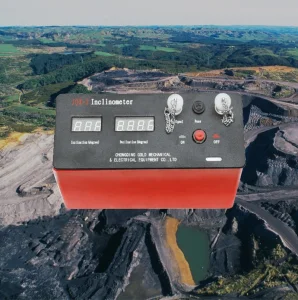
Inclinometers, settlement monitoring and noise detection are increasingly specified as part of the excavation method. Data helps contractors demonstrate control near railways, bridges, buildings and underground services.
Night works and dense urban sites require reliable noise and safety monitoring. Linkage-based detection systems and clear alarm logic can support compliance without slowing the excavation cycle.
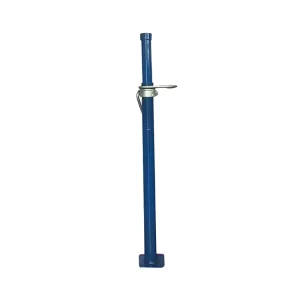
Aluminium trench shoring, adjustable steel supports and heavy-duty steel tracks improve mobility and safety. Modular systems are easier to transport to remote sites and faster to deploy in short weather windows.
The same machine can perform very differently depending on the surrounding asset, soil and seasonal window. These eight scenarios show where precision excavation systems create measurable value for Novosibirsk owners and contractors.
Replacement and crossing works near live heating networks require controlled excavation, shoring and rapid restoration to limit service interruption.
Pipe jacking and CIPP lining support sewer rehabilitation under roads, yards and industrial areas where open cutting is costly or disruptive.
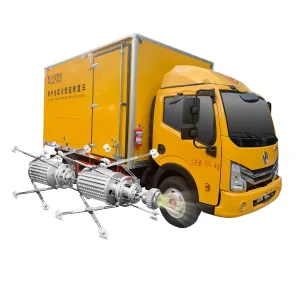
UV LED full-lining light trains help restore storm sewer assets with a smaller site footprint and faster return to service.
Impact moling and pipe jacking create crossings beneath roads and landscaped areas without cutting the surface asset.
Precision jacking, drilling heads and monitoring systems support settlement control near transport infrastructure and dense urban blocks.
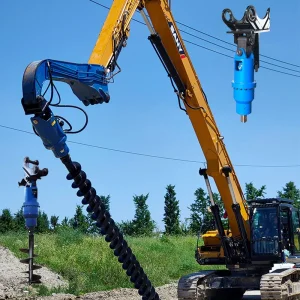
Warehouses, cold-chain facilities and industrial parks need reliable post-hole foundation work, trenching and soil excavation in variable ground.
Inclinometer systems provide data for slopes, retaining structures and embankments where seasonal freeze-thaw and groundwater can affect stability.
Noise detection and linkage systems help contractors protect community relations during night works and high-density construction.
These four systems bridge the gap between excavation, access and worker safety. They are often specified together with pipe jacking or monitoring equipment, particularly on compressed urban sites and deep utility trenches.
These questions reflect real procurement concerns for Russian and EAEU buyers evaluating factory-direct excavation systems from China.
Yes, subject to configuration. A winter-ready package can include low-temperature hydraulic oil, heated operator areas, battery management, pre-heating, hardened seals and a cold-start procedure. The final specification should be based on the storage method, shift pattern and lowest expected operating temperature, not only the city name.
The factory can provide technical descriptions, drawings, manuals, safety information and spare parts data to support the importer and an accredited certification body. CE and ISO evidence are useful, but they do not automatically replace EAEU technical regulation requirements. The correct route must be confirmed for the exact machine and end use.
Common options include rail via major China-Eurasia gateways, road transport and air freight for urgent parts. Novosibirsk is a logistics hub, so the best route depends on machine size, weight, project date, customs clearance point and whether spare parts are consolidated with the main shipment.
Configuration can be adjusted for clay, sand, alluvium, groundwater and mixed-face conditions. Buyers should provide a geotechnical report, drive length, pipe diameter, shaft dimensions and settlement limits. Those inputs allow the factory to recommend cutter heads, jacking force, lubrication and monitoring requirements more accurately.
Include the application, pipe or trench dimensions, soil report, groundwater condition, required drive length, site access, winter window, lifting constraints, documentation language, spare parts expectation and target delivery date. A complete RFQ shortens the engineering review and reduces quotation assumptions.
A project can be supported with a critical spare parts list, consumable package, operator manual, commissioning guidance and remote technical support. For remote Siberian sites, it is prudent to agree on a named service contact, escalation path and local mechanical support before shipment.
Send your utility plan, ground investigation, pipe diameter, trench depth, winter window and documentation requirements. The factory team can respond with a product shortlist, spare parts logic and export considerations for the Novosibirsk market.
Send Inquiry NowThese eight systems complete the factory range for trenchless rehabilitation, drilling, monitoring, power, tracks and trench support. Each link preserves the original product URL for direct technical review.
Send Inquiry Now




 Mintrix Excavator