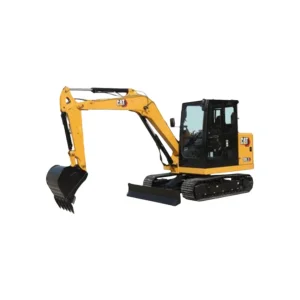
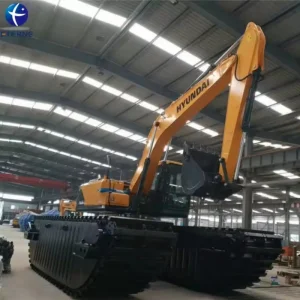
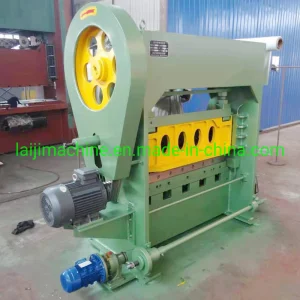
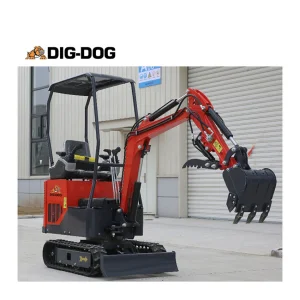
The first selection below shows eight application-led machines from the factory portfolio. For buyers researching China wholesale high output excavation equipment factory & suppliers, the practical question is not only machine size or engine power. It is how the equipment fits trenchless work, road construction, agriculture, mining, compact urban sites, and wetland operations while remaining serviceable over a full ownership cycle.
High output is not a single horsepower claim. For a quarry, it is bucket payload per cycle and availability; for a municipal contractor, it is low-noise operation, transport weight, and uptime; for a mine, it is ground control, machine stability, service access, and spare-parts discipline. Serious buyers compare factory capability, application fit, and lifecycle support before price. The six checks below turn “high output” from a brochure phrase into a measurable procurement decision.
Load-sensitive or flow-matched hydraulic systems should be specified against the real duty cycle. Request pump flow, relief settings, cooling capacity, filtration strategy, and thermal test evidence—not only engine power.
Output per hour depends on bucket fill, swing speed, travel distance, and operator technique. Use a cycle-time estimate or reference video from a comparable site, then calculate realistic output with bucket payload, fill factor, and availability.
Continuous excavation creates heat, dust, and contamination risk. A high-output specification should include serviceable coolers, protected intake systems, accessible filters, and clear maintenance intervals for hydraulic oil and wear parts.
High output often comes from matching one carrier to many tasks. Quick couplers, auxiliary hydraulic lines, pontoon systems, pile drivers, breakers, and grading attachments increase utilization only when hydraulic flow and structural ratings are engineered together.
Service access, diagnostic ports, wear-part availability, and manual clarity influence real output more than peak performance on a spec sheet. Ask for parts-book structure, commonality across models, and critical spare recommendations.
Operator confidence supports productivity. Evaluate visibility, access, control layout, guarding, and site-specific requirements such as ROPS/FOPS, lighting, alarms, and dust protection. Final compliance must be verified for the destination market.
The strongest procurement signal is not a slogan; it is a documented operating history. The company profile below provides the factory’s stated experience, production scale, R&D structure, certifications, and export activity. Buyers should still verify certificate scope, model-level test reports, serial-number traceability, and factory audit evidence during due diligence.
Founded in 1995, Guangzhou Mintrix Excavator Co., Ltd. began specializing in producing excavating machinery in 2003. We currently have an annual production capacity of nearly 20,000 units, offering a range of products that includes medium and small wheel excavators, small crawler excavators, our patented wheel-crawler integrated excavators, dump trucks, and skid steer loaders. Our brands, RHINOCEROS, XINIU, and Kenstone, are synonymous with innovation and quality.
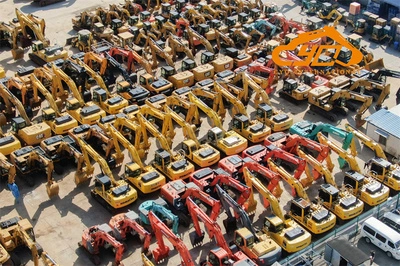
We employ over 600 skilled workers, including a dedicated R&D team of more than 70 professionals. All our products undergo rigorous testing and comply with ISO and CE standards.
Since 2010, we have been actively expanding our international trade business. By 2023, our annual foreign trade sales have reached approximately $70 million. This growth is primarily due to our focus on product development, consistent participation in international engineering machinery exhibitions such as the Canton Fair and Bauma in Germany, and on-site visits to clients to gather first-hand market demand information. Our company leaders and technical sales team have traveled to numerous countries and regions, including Europe, the United States, South America, Central Asia, Southeast Asia, and Africa.
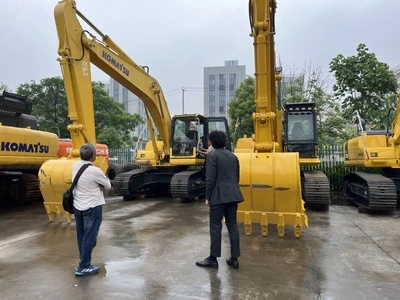
Our R&D personnel are divided into 9 teams, each focusing on developing and improving different models to meet international market needs. For example, in 2014, we were the first to create and produce the first single-cylinder micro excavator in China, which quickly gained popularity in international markets and has been in high demand ever since.
Our company has obtained certifications for quality management, environmental management, occupational health and safety management, intellectual property management, and energy management systems, as well as the DCMM (Level 2) certification. Our products have passed the EU CE certification. We have been recognized as a high-tech enterprise, a provincial manufacturing single champion enterprise, a specialized and new enterprise, and a provincial gazelle enterprise.
Global enterprises rarely buy a single machine in isolation. They buy a specification that must survive tender review, container loading, commissioning, operator adoption, warranty administration, and spare-parts planning. The strongest suppliers reduce procurement risk by making technical assumptions visible and by providing evidence that travels with the machine.
Request model-specific certificates, declaration documents, test reports, nameplate details, and serial-number traceability. Generic company certificates are useful context, but they do not replace evidence for the exact model being purchased.
Compare fuel consumption, wear-part life, hydraulic component serviceability, planned maintenance, transport cost, and resale potential. A lower purchase price can become expensive if a machine is difficult to service or dependent on slow-moving parts.
Define bucket capacity, auxiliary hydraulic flow, coupler type, guarding, lighting, seat, travel speed, and attachment packaging. Customization should be documented with drawings, approved component lists, and a final configuration sheet.
For wholesale orders, mixed-model loading can reduce freight waste, but it requires accurate dimensions, weight distribution, securing plans, and export packaging. Ask for loading photos before shipment and confirm unloading requirements at destination.
Commercial invoice, packing list, bill of lading, certificate of origin, inspection record, operation manual, parts book, and warranty statement should be aligned before production. Traceability by serial number improves service response and fleet management.
Ask for a recommended spare-parts kit, wear-part map, service intervals, troubleshooting guide, and operator training plan. For remote sites, document who will provide technical escalation and how replacement parts will be prioritized.
China’s construction-equipment supply chain is valuable when it converts scale into repeatable quality, faster configuration changes, and export-ready coordination. For wholesale buyers, the advantage is not simply a lower unit price. It is the ability to align R&D, production, testing, packaging, documentation, and market feedback around a target application.
The company states that R&D personnel are divided into 9 teams, each focused on different models. This structure can support faster adaptation of compact excavators, wheeled machines, crawler units, and specialized attachments for export markets.
Nearly 20,000 units of annual capacity and more than 600 skilled workers provide a base for repeat orders, model mixing, and seasonal demand planning. Buyers should still confirm lead time by model, configuration, and certification requirement.
A mature supply ecosystem supports hydraulic components, castings, structures, attachments, and electrical parts. Procurement teams should request approved-brand lists, component change notifications, and inspection standards for critical systems.
Participation in events such as the Canton Fair and Bauma in Germany, plus on-site client visits, helps factories gather first-hand demand signals. That feedback can influence guard design, service access, attachment packages, and operator controls.
The company reports active international trade since 2010 and approximately $70 million in foreign trade sales by 2023, with engagement across Europe, the United States, South America, Central Asia, Southeast Asia, and Africa.
The company reports quality, environmental, occupational health and safety, intellectual property, and energy management certifications, plus DCMM Level 2. EU CE certification is also stated. Verify validity, scope, and model coverage before tender submission.
Request model-level CE certificate scope, verify ISO certificate validity and issuing body, confirm serial-number traceability, compare critical hydraulic component lists, approve export packaging for mixed containers, and document final inspection with photo or video evidence.
Localized support means the machine arrives ready for the market, the site, and the operator—not merely translated. It connects specification, compliance, documentation, spare-parts planning, commissioning, and training. Because market-entry rules vary, final registration and import approval should always be validated with local authorities and qualified advisors.
Clarify engine emission requirements, electrical voltage, lighting, alarms, guarding, travel speed, attachment hydraulics, and transport dimensions. A clear configuration freeze before production prevents costly changes later.
Ask for certificate copies, applicable standards, nameplate information, and model-level declarations. Keep evidence aligned with the exact machine configuration and serial number, especially for EU-facing tenders.
Operation manuals, safety labels, maintenance schedules, and parts books should match the operator’s language and service environment. Poor documentation creates downtime even when the machine specification is strong.
Plan a first-order parts kit around filters, hoses, seals, teeth, cutting edges, and high-wear hydraulic items. Define reorder triggers, packaging, and shipment method so routine maintenance does not wait for emergency freight.
High dust, humidity, heat, cold, mud, or coastal conditions may require different filtration, corrosion protection, cooling, or electrical protection. Provide site photos and duty-cycle data during quotation.
The supplier should provide accurate product evidence; the importer or distributor should verify local registration, tax, labeling, and market-specific safety obligations. Document these responsibilities in the contract.
The next generation of high-output equipment is being shaped by productivity plus restraint: less noise, lower emissions, better safety, smarter service, and more precise application matching. Buyers who understand these trends can structure specifications that remain competitive beyond the first project.
Municipal projects increasingly value low-noise road headers, electric or hybrid options, and equipment that can work in tighter hours. Noise, vibration, and emissions should be evaluated alongside excavation speed.
Fleet managers want utilization data, maintenance reminders, fault codes, and remote troubleshooting. Telematics should be specified with clear data ownership, connectivity requirements, and service escalation workflows.
Mini excavators, skid steer loaders, compact construction equipment, and modular pontoon systems allow contractors to serve urban sites, rental fleets, and specialized applications with lower transport friction.
Trenchless drainage repair, pipe jacking, and controlled excavation reduce surface disruption. Equipment such as CIPP point repair plugs and pipe jacking systems support infrastructure renewal in dense areas.
Visibility, access systems, guarding, dust protection, and intuitive controls are becoming procurement criteria rather than optional extras. Better ergonomics can improve output by reducing fatigue and operating errors.
Agriculture, mining, shipbuilding, road maintenance, and wetland works each demand different attachments and machine behavior. Application-specific configuration is replacing one-size-fits-all purchasing.
A machine becomes productive only when it matches the local job site. The scenarios below show how the portfolio can be mapped to infrastructure, agriculture, mining, compact construction, and industrial fabrication requirements.
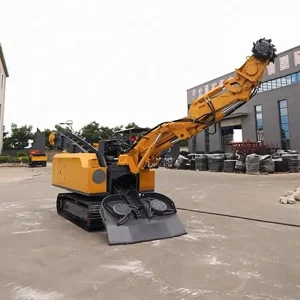
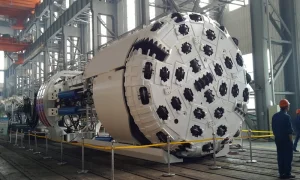
Low-noise environmental road header machines are relevant where noise, vibration, and access constraints matter. Buyers should compare cutting performance with site geology, ventilation, and municipal work-hour limits.
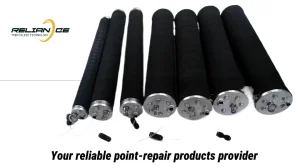
CIPP point repair pipe plugs support trenchless repair workflows that reduce surface disruption. Confirm diameter range, pressure requirements, installation method, and operator training needs.
Agricultural drainage and irrigation machinery must handle soil conditions, seasonal schedules, and simple maintenance. Localized support should include practical setup guidance and accessible wear parts.
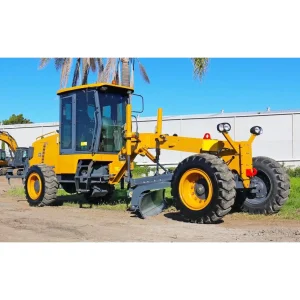
Small motor graders such as the 100HP GR1003 earth-moving machine can serve municipal road maintenance, shoulders, and site preparation where maneuverability and transport efficiency matter.
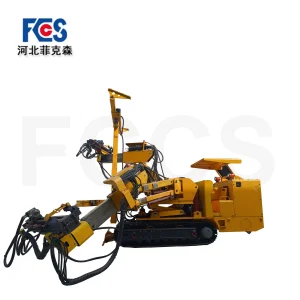
Heavy-duty pipe jacking machines, CMM2 hydraulic roof support bolting systems, and related equipment require careful attention to mine-specific safety rules, ground conditions, and maintenance planning.
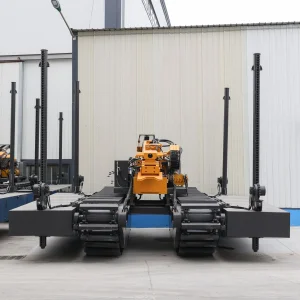
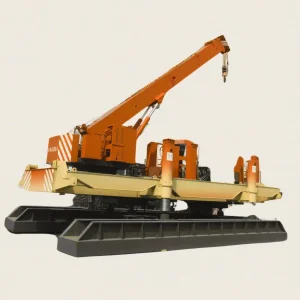
Amphibious excavators and modular excavator pontoons support wet, soft-ground, and dredging environments. Stability, pontoon configuration, corrosion protection, and recovery planning are essential.
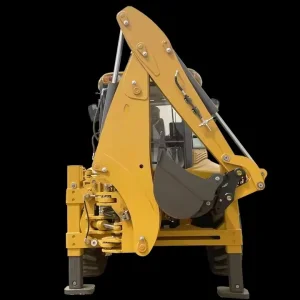
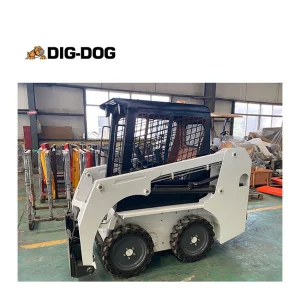
OEM mini excavators, skid steer loaders, and compact construction equipment can serve rental fleets, landscaping, utility work, and tight urban sites. Quick attachment changeover improves fleet utilization.
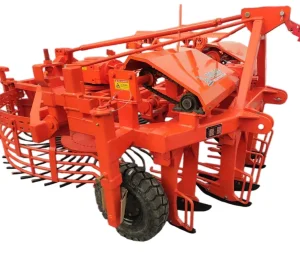
The high-performance 6-row beet harvesting machine with custom blade illustrates application-specific agricultural mechanization. Buyers should align row spacing, soil type, blade configuration, and service access.
Stainless steel plate expanded metal mesh machinery supports shipbuilding, mining, machinery, construction, transportation, oil, and urban protection applications. Capacity, material grade, and tooling should be specified together.
Use a weighted scorecard rather than a single price comparison. A simple effective-output model can guide discussions: Effective output ≈ cycles per hour × bucket payload × fill factor × availability. This is an estimate, not a guarantee. It must be validated with site conditions, operator skill, material density, and maintenance discipline.
Do not compare “output” only against purchase price. Compare effective output against fuel, wear parts, maintenance labor, downtime risk, freight, and compliance rework. A factory that provides clear evidence, traceability, and service planning is often more valuable than a quotation that competes only on initial price.
Risk note: certificates, statements, and performance claims should be verified against the exact model, configuration, serial number, and destination market. Procurement decisions should involve qualified technical and compliance reviewers.
The company profile states that Guangzhou Mintrix Excavator Co., Ltd. is a manufacturer founded in 1995 and specializing in excavating machinery production from 2003. Its brands include RHINOCEROS, XINIU, and Kenstone. Buyers should still conduct a factory audit and verify business registration.
The stated annual production capacity is nearly 20,000 units, with more than 600 skilled workers and a dedicated R&D team of more than 70 professionals. R&D personnel are divided into 9 teams focused on different model families.
The company reports ISO and CE compliance, quality, environmental, occupational health and safety, intellectual property, and energy management system certifications, plus DCMM Level 2. It also states high-tech enterprise and other recognitions. Verify certificate validity and model scope before purchase.
The company profile lists medium and small wheel excavators, small crawler excavators, patented wheel-crawler integrated excavators, dump trucks, and skid steer loaders. Product links on this page also cover trenchless repair, road headers, motor graders, agricultural machinery, mining equipment, pontoons, and specialized machinery.
Use effective output estimates: cycles per hour × bucket payload × fill factor × availability. Then verify hydraulic matching, cooling capacity, service access, wear-part life, operator ergonomics, and spare-parts support with model-specific evidence.
OEM and configuration discussions can cover attachments, hydraulic flow, guarding, lighting, labeling, manuals, and packaging. Final market registration and compliance remain subject to destination requirements and should be validated with local authorities and documented in the contract.
The company reports international trade expansion since 2010, approximately $70 million in foreign trade sales by 2023, and engagement across Europe, the United States, South America, Central Asia, Southeast Asia, and Africa, supported by events such as the Canton Fair and Bauma in Germany.
Include the approved configuration sheet, certificate and document package, spare-parts list, wear-part map, operator manuals, training responsibilities, inspection records, warranty boundaries, technical escalation path, and shipment loading evidence.
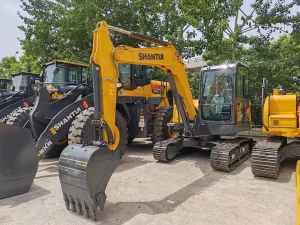
The remaining equipment selection covers larger earth-moving excavators, amphibious and pontoon systems, mining roof support and pipe jacking, compact hydraulic machines, skid steer loaders, pile driving, and industrial mesh production. Each product link preserves the original model and application context for technical comparison.
 Mintrix Excavator