Why Do Excavation Operations Face Common Problems?

Time:2026-10-18 Author:Sienna
0%

Excavation appears straightforward from a distance: remove soil, shape the trench, and prepare the ground. On site, conditions change quickly. Unstable soil, hidden utilities, groundwater, vibration, and limited access can disrupt even carefully planned work. A dry trench at 8 a.m. may collect water by noon. A quiet site may reveal an undocumented cable after the first bucket enters the ground. These details explain why excavation requires more than powerful equipment and a basic schedule.

Anyone asking “what are common problems in excavation operations” should examine both technical and human factors. Soil classification can be inaccurate, survey information may be outdated, and machine operators may face poor visibility. Inadequate shoring or unsafe trench access can increase risks for workers and nearby structures. Equipment downtime also creates pressure, encouraging rushed decisions. That pressure matters.

Experienced contractors reduce these problems through geotechnical assessments, utility locating, daily inspections, and clear communication between crews. They monitor trench movement, weather changes, water levels, and nearby building conditions. Reliable records support better decisions, especially when site conditions differ from the original plan. Industry guidance and qualified engineering advice should shape excavation methods, not guesswork.

Still, no checklist catches everything. Field experience can be valuable, but it is not perfect. A competent team must remain willing to stop, reassess, and revise its method. This introduction explores the most frequent excavation challenges, why they occur, and how disciplined planning can limit their impact without pretending that every site behaves predictably.
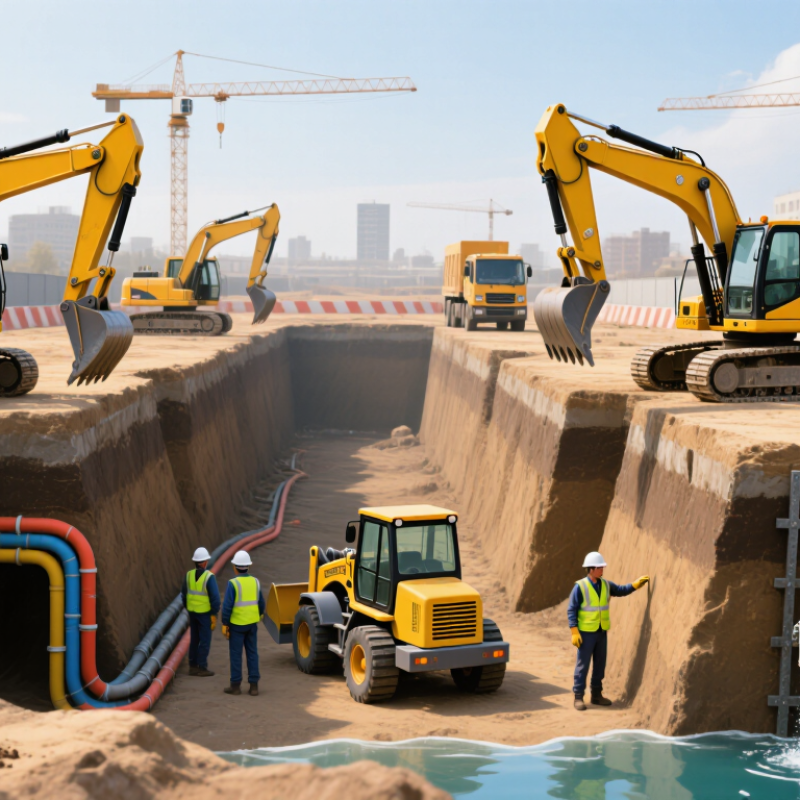
Why Do Excavation Operations Face Common Problems?

What Are Excavation Operations and Why Are They Important?

Excavation operations create openings in the ground for foundations, utilities, drainage, roads, and retaining structures. They include surveying, locating buried services, removing soil, supporting trench walls, controlling water, and backfilling. Without this work, many essential infrastructure projects cannot reach stable ground.

Excavation also protects project quality. A foundation trench must match the design depth and width. Uneven soil, standing water, or loose edges can weaken later construction. The U.S. Occupational Safety and Health Administration identifies cave-ins as the greatest trenching hazard and requires protective systems for many excavations five feet or deeper. That requirement reflects field risk, not paperwork.

The numbers remain serious. The U.S. Bureau of Labor Statistics reported 1,069 fatal work injuries in construction during 2022. Excavation incidents form only part of that figure, but their consequences can develop within minutes. The National Institute for Occupational Safety and Health recommends competent-person inspections, safe access, and separation from spoil piles and equipment. Small details matter.

Good excavation depends on soil assessment and daily judgment. Weather can change a stable trench overnight. Water may appear after a clear morning. A plan can be correct and still become unsafe. Crews sometimes trust yesterday’s conditions too much; that is a weakness worth challenging. Careful measurements, clear communication, and documented inspections make excavation more predictable, though never completely risk-free.

Why Do Excavation Operations Face Common Problems? - What Are Excavation Operations and Why Are They Important?

Excavation operations involve removing soil or rock to create trenches, foundations, utilities, and other below-ground structures. The following OSHA-based thresholds show how depth, access, and edge protection help control common excavation hazards such as cave-ins, falls, and falling materials.

Reference: U.S. Occupational Safety and Health Administration, 29 CFR 1926 Subpart P. Protective systems are generally required for excavations 5 feet or deeper, safe access is required in trenches 4 feet or deeper with travel limited to 25 feet, and materials should be kept at least 2 feet from the excavation edge.

Which Ground Conditions Make Excavation More Difficult?

Why Do Excavation Operations Face Common Problems?

Which Ground Conditions Make Excavation More Difficult?

Excavation becomes difficult when the ground behaves differently from early site records. Loose, saturated sand can collapse quickly, especially after rainfall or nearby vibration. Water may flow into the trench through hidden seams. It can also soften the excavation base.

Expansive clay creates another challenge. It swells when wet and shrinks during dry periods, causing movement around foundations and retaining systems. Frozen ground can appear stable, yet thawing may produce sudden slumping. Weather changes matter more than many schedules suggest.

Rocky ground slows production and increases equipment stress. Unexpected boulders or fractured rock can also damage trench walls. Made ground is less predictable. Buried rubble, old fill, and weak pockets may sit beneath a firm surface. That surface can be misleading.

Careful investigation helps, but it cannot reveal everything. Ground conditions vary across short distances. A borehole several metres away may miss a wet pocket completely. Experienced teams compare soil logs with visible site changes each day. They watch for cracking, seepage, unusual settlement, and changes in spoil texture.

Small warning signs matter. Really.

Safe planning may require staged excavation, temporary support, controlled dewatering, or revised access routes. Excavation edges should be checked after heavy rain, freezing temperatures, and nearby construction activity. I have seen tidy plans become unsuitable after one storm. That is not always poor planning; sometimes the ground simply exposes an assumption that needed testing.

How Do Planning and Design Errors Cause Excavation Problems?

Excavation failures often begin before a bucket reaches the ground. A design may show a neat trench, while the site contains layered fill, perched water, or undocumented services. Misclassified soil changes the required slope or protective system. A small error can become a collapse.

The Occupational Safety and Health Administration recorded 130 worker deaths from trenching and excavation cave-ins between 2011 and 2016. Its safety guidance describes roughly 25 fatalities annually during that period. This is not merely a safety statistic. It shows how incomplete planning can turn production pressure into a life-threatening condition. Designers should verify soil assumptions, groundwater levels, nearby foundations, and surcharge loads from cranes, trucks, and spoil piles.

Utility records also need field confirmation. A survey that stops at the property line may miss a service crossing the work zone. Plans should combine records, detection methods, trial holes, and clear exclusion zones. A pipe trench may also lack safe access, working space, or room for shoring components. Those omissions force crews to improvise. The Construction Industry Institute has reported that rework can average about 5% of total construction cost. Excavation rework appears as over-excavation, imported fill, pumping, redesign, or delayed concrete placement. Better reviews test constructability, not calculations alone. We sometimes approve plans too quickly. That habit deserves scrutiny.

What Equipment, Workforce, and Safety Issues Affect Excavation Work?

Why Do Excavation Operations Face Common Problems?

Excavation work often struggles when equipment does not match ground conditions. A heavy machine may perform poorly in wet clay or cramped urban spaces. Worn teeth, leaking hydraulic lines, and weak attachments slow production quickly. Operators should inspect fluids, tracks, alarms, and attachment pins before each shift. Small defects become expensive delays. Field experience shows that equipment logs are useful, but crews sometimes complete them too quickly.

Workforce problems can be less visible. Inexperienced operators may misread soil changes or underestimate equipment swing areas. Clear role assignments reduce confusion between operators, spotters, surveyors, and supervisors.

Daily briefings should cover excavation depth, access routes, overhead hazards, and nearby utilities. Communication must remain simple. Radios can fail, and hand signals may be misunderstood through dust or engine noise. A capable supervisor checks understanding instead of assuming it.

Safety risks increase when schedules pressure workers to move faster. Unstable edges, falling materials, and unexpected water require constant observation. Protective systems must suit the excavation depth and soil condition. Safe access should be close, visible, and free from stored materials. Workers also need distance from moving equipment. I have seen well-written plans ignored when conditions changed after rain. That is a serious weakness. Inspections should occur before work, after weather changes, and whenever the excavation looks different. Human judgment still matters, even with careful procedures.

How Do Weather, Utilities, and Site Changes Disrupt Excavation Operations?

Excavation operations rarely fail from one dramatic mistake. Weather, buried utilities, and changing site conditions create small disruptions that compound quickly. Rain softens trench walls and fills access routes with slippery mud. Frozen ground slows cutting and increases equipment strain. NOAA reported 28 billion-dollar weather and climate disasters in the United States during 2023. That is not an excavation statistic. However, it shows why weather planning cannot remain a paperwork exercise.

Utility uncertainty creates another serious disruption. The Common Ground Alliance’s 2023 DIRT Report recorded more than 200,000 utility damage events in the previous reporting period. A single unmarked service can stop production, trigger redesign, and expose workers to danger. OSHA also recorded 39 trenching fatalities in 2022. Field teams should treat markings as guidance, not perfect truth. Site conditions change, and our assumptions sometimes fail. A new stockpile, pump, or access road can redirect water toward an open trench.

Tips: Check forecasts before mobilization. Recheck utility marks after site movement. Keep pumps, barriers, and safe access routes ready. Photograph changing ground conditions each shift. If soil cracks appear near the edge, stop work and reassess. A precise schedule still needs room for weather delays and field judgment.

FAQS

What are excavation operations?

Excavation operations create openings for foundations, utilities, drainage, roads, and retaining structures. They include surveying, soil removal, water control, wall support, and backfilling.

Why is excavation important for construction?

Excavation provides stable ground for later construction. Incorrect depth, width, or alignment can weaken foundations and drainage systems.

Which ground conditions make excavation difficult?

Loose sand, saturated soil, expansive clay, frozen ground, rock, and old fill create different risks. A firm surface can hide weak pockets underneath.

How can weather change excavation conditions?

Rain can soften trench walls and create slippery access routes. Freezing and thawing may cause sudden slumping. Yesterday’s safe trench may change overnight.

How should teams respond to unexpected water?

Crews should monitor seepage, standing water, and soft trench bases. Pumps, drainage controls, or staged excavation may be necessary. Water changes everything.

Why are buried utilities a major concern?

Unknown or inaccurately marked utilities can stop work and require design changes. Teams should verify markings and avoid treating them as perfect information.

What warning signs suggest an excavation may be unsafe?

Watch for edge cracks, seepage, settlement, unusual soil texture, and damaged trench walls. Nearby traffic or equipment can increase ground movement.

How can excavation planning become more reliable?

Teams should inspect soil daily, check weather forecasts, maintain safe access, and document changing conditions. A tidy plan can still miss reality.

When should excavation work stop?

Stop when cracks appear, water rises, walls move, or conditions differ from the approved plan. Reassess the site before restarting work. Believing the schedule is not enough.

Conclusion

Excavation operations are essential for foundations, roads, drainage systems, pipelines, and other construction projects, but they can be affected by many interconnected challenges. What are common problems in excavation operations? Typical issues include unstable or unexpected ground conditions, groundwater, hard rock, loose soil, and limited working space. Poor planning or inaccurate site information may result in incorrect excavation depths, weak support systems, delays, rework, and additional costs. Careful surveying, design reviews, and risk assessment are therefore important before work begins.

Equipment breakdowns, unsuitable machinery, inadequate workforce training, and weak communication can also reduce productivity and increase safety risks. In addition, rain, flooding, extreme temperatures, underground utilities, traffic, nearby structures, and unexpected site changes may disrupt the operation. Effective excavation requires coordinated planning, suitable equipment, competent supervision, regular inspections, and flexible responses to changing conditions. By identifying hazards early and maintaining clear communication among all workers, project teams can improve efficiency, protect people and surrounding property, and complete excavation work more reliably.

Sienna

Sienna

Sienna is a skilled marketing professional with a deep expertise in our company’s core products and services. With a passion for innovation and detail, she plays a pivotal role in crafting insightful blog posts that not only highlight the unique features of our offerings but also provide valuable......