What Are the Top 10 Construction Machinery Trends? This question now reaches beyond engine power and lifting capacity. Construction sites are becoming connected, automated, and more energy-conscious. Telematics can show fuel use, idle time, machine location, and maintenance alerts from a mobile dashboard. Some operators can identify a failing hydraulic component before oil leaks across the site.
Deloitte’s 2025 Engineering and Construction Industry Outlook highlights labor shortages, digital delivery, and productivity pressure as major industry challenges. The International Energy Agency’s Global EV Outlook 2024 also records accelerating electrification across road transport, influencing battery development for smaller excavators and loaders. These reports do not predict one universal machine. They reveal a market moving in several directions at once. Quiet electric equipment may suit urban projects, while high-capacity diesel machines remain practical for remote earthmoving.
Volvo Construction Equipment President Melker Jernberg has said, “The construction industry is changing, and we are committed to leading the way toward a more sustainable future.” His statement reflects the central question behind what are the latest trends in construction machinery: how can contractors improve output while reducing emissions, downtime, and operating risk? The answer includes autonomous functions, digital twins, alternative fuels, rental growth, and machine-as-a-service models. Not every innovation will pay back quickly. Some pilots will disappoint. That matters. Real jobsite results, operator experience, total ownership cost, and trustworthy reporting must guide the discussion. This introduction examines ten trends shaping equipment decisions today, while acknowledging that tomorrow’s strongest technology may still be imperfect.
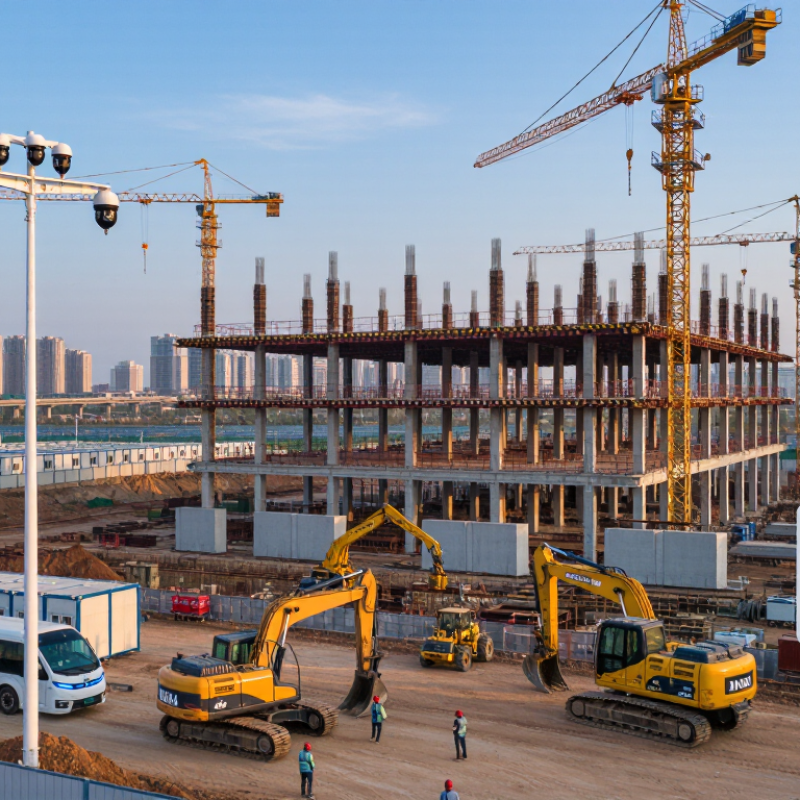
Construction machinery trends are shaped by stronger forces than product launches. Urban growth is one of them. The United Nations projects that 68% of the world’s population will live in cities by 2050. This pressure increases demand for excavators, lifting equipment, compact machines, and infrastructure upgrades. McKinsey’s Reinventing Construction report also found that construction productivity grew by only 1% annually over two decades. That gap encourages contractors to adopt telematics, semi-automation, and equipment that reduces idle time.
Climate targets create another powerful force. The 2023 Global Status Report for Buildings and Construction, published by UNEP and GlobalABC, reported that the sector consumed 34% of global energy and produced 37% of energy and process-related emissions in 2022. Electric and hybrid machinery therefore moves from experimental use toward practical deployment, especially on urban sites with noise limits. Battery charging remains a weakness. It can delay work when grid capacity is poor.
Labor shortages also influence machine design. Contractors need safer controls, remote monitoring, and simpler maintenance procedures. Rental demand may rise because smaller firms cannot finance every specialized machine. Supply-chain shocks have exposed another problem: low-cost ownership is not always reliable ownership. In practice, a machine with strong uptime data may outperform a cheaper model. Yet data quality is inconsistent. That deserves more scrutiny. Construction machinery trends are being defined by productivity, emissions, labor, financing, and resilience—not by technology alone.
Construction machinery is moving steadily toward electric and low-emission operation. Battery-powered excavators, loaders, and compact equipment now work effectively on urban sites, indoor projects, and night shifts. They produce less local exhaust and noticeably lower noise. That matters near homes, hospitals, and schools.
The practical change begins with duty-cycle planning. Fleet managers measure digging time, travel distance, load weight, and charging access before choosing equipment. A small electric excavator may complete a full shift with scheduled charging during breaks. Larger machines remain more difficult, especially on remote sites with weak power supplies. Temporary battery storage and renewable electricity can reduce generator use, but they add cost and planning pressure. Charging is not simple.
Low-emission diesel engines still have a role. Cleaner fuels, automatic shutdown systems, and hybrid powertrains can reduce fuel consumption during heavy work. Telematics also helps supervisors identify long idle periods, harsh operation, and maintenance risks. In my experience, operator training often delivers faster savings than new hardware. A skilled operator can protect battery life and reduce unnecessary hydraulic demand. However, projected savings are sometimes too optimistic. Cold weather, poor charging habits, and delayed maintenance can quickly change the result. Construction companies need reliable field data, transparent emissions reporting, and realistic lifecycle calculations before expanding electric fleets.
Construction machinery is moving from mechanical power toward connected decision-making.
The leading ten trends are autonomous earthmoving, machine control, telematics, computer vision, drone mapping, robotic layout, automated material handling, digital twins, predictive maintenance, and data-driven fleet management. These systems are changing how operators plan, control, and inspect equipment.
The International Federation of Robotics reported 541,302 industrial robots installed worldwide in 2023, a 10% annual increase.
Construction receives fewer robots than manufacturing, yet the supporting technologies are highly transferable.
A tracked excavator can now follow a digital grade, record fuel use, and flag unusual hydraulic pressure. A camera system can detect workers near a reversing machine. Small gains matter.
Safety remains the strongest argument.
The U.S. Bureau of Labor Statistics recorded 1,069 construction fatalities in 2022. Remote operation and collision alerts may reduce exposure, but they cannot replace site judgment.
The World Economic Forum’s Future of Jobs Report 2023 found that 44% of workers’ core skills may change by 2027. Operators will need training in sensors, software, and failure response. That transition is uneven.
Connectivity can also create false confidence when data is incomplete, poorly calibrated, or ignored. Field teams should test automation in controlled tasks before expanding it across a busy site.
The smartest machine is still limited by weak planning.
Construction machinery is shifting from isolated equipment to connected, measurable work systems. The strongest trends include telematics, remote diagnostics, machine control, predictive maintenance, digital twins, autonomous assistance, electric power, site connectivity, operator analytics, and cybersecurity. Among these, digital connectivity has the fastest practical impact. A connected excavator can transmit location, fuel use, engine hours, idle time, and fault codes every few minutes.
Field experience shows that telematics data becomes useful only when teams act on it. A fleet manager may detect excessive idling at one site and adjust shift planning. Maintenance staff can receive an alert before a hydraulic problem causes costly downtime. Operators can also compare production rates, cycle times, and fuel consumption through simple dashboards. Clear data improves decisions.
But connected operations are not automatically efficient. Poor network coverage can create missing records. Incorrect sensor calibration can produce confident, wrong conclusions. I have seen teams collect thousands of data points without changing one daily task. That is wasted potential. Companies should define practical measurements, verify alerts with field inspections, and protect access to machine information. Human judgment still matters.
Digital twins are becoming more detailed. Machine control is reducing grading errors. Remote support is shortening troubleshooting time. Electric equipment is entering smaller urban projects, where noise and emissions matter. These developments depend on reliable data standards, trained technicians, and operators who trust the system. The technology is advancing quickly, but implementation remains uneven. A quiet dashboard cannot replace experience beside the machine.
Construction machinery is moving toward ten linked trends: battery-electric drives, hybrid power, low-carbon fuels, lighter structures, modular attachments, telematics, AI maintenance, autonomous functions, remote control, and built-in safety sensing. The driver is practical. UNEP’s 2023 Global Status Report reported that buildings used 34% of global energy demand and created 37% of energy-related carbon emissions in 2022. Cleaner machinery can reduce site exhaust, especially in enclosed or urban projects. Electric excavators also cut noise near homes, hospitals, and schools.
Safety and efficiency are becoming measurable. Proximity detection, camera systems, geofencing, operator monitoring, and automatic shutdowns can reduce blind-spot incidents. The ILO estimated 2.93 million work-related deaths annually in its 2023 report, alongside 395 million non-fatal injuries. Machinery design cannot solve every human-risk problem. Training, maintenance, and site discipline still matter. They matter daily.
Data platforms now record idle time, fuel use, battery temperature, overloads, and service intervals. Managers can compare machines by task, not brochure claims. Predictive maintenance may prevent a failed hydraulic hose from stopping a crew. Poor sensor data creates false confidence, however. That weakness deserves attention. Battery recycling, repairable components, and standardized charging systems will decide whether electrification is truly circular. Progress is real, yet uneven. A quiet machine is not automatically a sustainable one.
The chart presents an evidence-based priority index for sustainable, safe, and efficient construction machinery development. Electrification, telematics, automation, safety systems, and predictive maintenance are leading the transition toward lower emissions, higher productivity, and improved operator protection.
Index methodology: a comparative 0–100 synthesis of documented industry priorities and standards, informed by UNEP Global Status Reports, IEA construction-sector analysis, EU Stage V emissions requirements, ISO 15143-3 telematics practices, and occupational safety guidance.
Major trends include autonomous assistance, machine control, telematics, computer vision, drone mapping, and robotic layout. Digital twins and predictive maintenance are also growing. Progress remains uneven.
Telematics records location, fuel use, engine hours, idle time, and fault codes. A manager can notice an excavator idling beside a stockpile. Then, the shift plan can change. Data helps only when people act on it.
No. Autonomous functions can follow digital grades or repeat controlled movements. Operators still handle unusual ground, changing weather, and nearby workers. Human judgment remains essential. The machine may be clever, but not wise.
Cameras can detect workers near reversing equipment. Proximity alerts, geofencing, and automatic shutdowns can reduce blind-spot risks. Remote operation may reduce exposure to dangerous areas. Still, alerts can be missed or misunderstood.
Operators need training in sensors, software, calibration, and failure response. Technicians must understand digital alerts and physical inspections. A warning light is not a diagnosis. Practice matters.
Sensors can identify unusual pressure, overheating, or changing vibration patterns. A maintenance team may inspect a hydraulic system before a hose fails. This can prevent a stopped crew and delayed work. Predictions are not perfect.
Electric machines can reduce exhaust and noise near homes, schools, and hospitals. Their overall benefit depends on charging systems, battery recycling, and repairable parts. A quiet machine is not automatically sustainable. That deserves more attention.
Weak network coverage can leave missing records. Poor calibration can produce precise-looking but incorrect results. Large dashboards may collect thousands of data points without changing work. That is wasted potential. Teams should verify alerts in the field.
The construction machinery industry is being shaped by several powerful forces, including urban development, labor shortages, rising operating costs, stricter environmental expectations, and the need for greater productivity. When asking “what are the latest trends in construction machinery,” key developments include the transition toward electric and low-emission equipment, improved energy efficiency, and machine designs that reduce fuel use, noise, and environmental impact without sacrificing performance.
At the same time, automation, robotics, and smart technologies are transforming how construction tasks are planned and completed. Digital connectivity, telematics, remote monitoring, and data-driven operations help contractors track equipment performance, predict maintenance needs, improve safety, and reduce downtime. Future machinery will increasingly combine intelligent controls, sustainable power systems, connected data, and operator-focused safety features, creating more efficient, flexible, and responsible solutions for modern construction projects.

Mintrix Excavator