Top 10 Tips for Selecting Small Construction Equipment?

Time:2026-09-18 Author:Amelia
0%

Selecting equipment for a small construction project can shape the entire job. A compact excavator may fit through a narrow gate, while a larger machine could damage paving or delay delivery. These details matter.

This guide explains how to select equipment for small construction projects with practical judgment, not showroom excitement. It examines site access, ground conditions, lifting capacity, fuel use, operator skill, attachments, rental terms, maintenance support, and safety features. A machine that looks affordable may become expensive when transport, downtime, and servicing are included. Measure the work area before choosing the machine. Check the soil before trusting its claimed digging performance.

Construction equipment economist Mike Vorster often stresses this principle: “Equipment decisions should be made on total cost, not purchase price alone.” His view reflects an important professional habit. Compare ownership costs with rental costs, expected working hours, transport fees, and replacement risks. Small errors can become large expenses.

Real projects are rarely perfect. A forecast may underestimate wet soil, limited storage, or operator fatigue. That is why careful selection needs room for doubt. Ask what could go wrong.

The following tips offer a clear starting point for contractors, renovators, and property owners. They focus on usable performance rather than impressive specifications. Readers will learn how to match equipment with the task, workspace, budget, and timeline. Some recommendations may seem obvious, but obvious steps are often skipped under pressure. Reliable decisions begin with accurate measurements, honest site assessment, and advice from qualified equipment dealers or experienced operators.
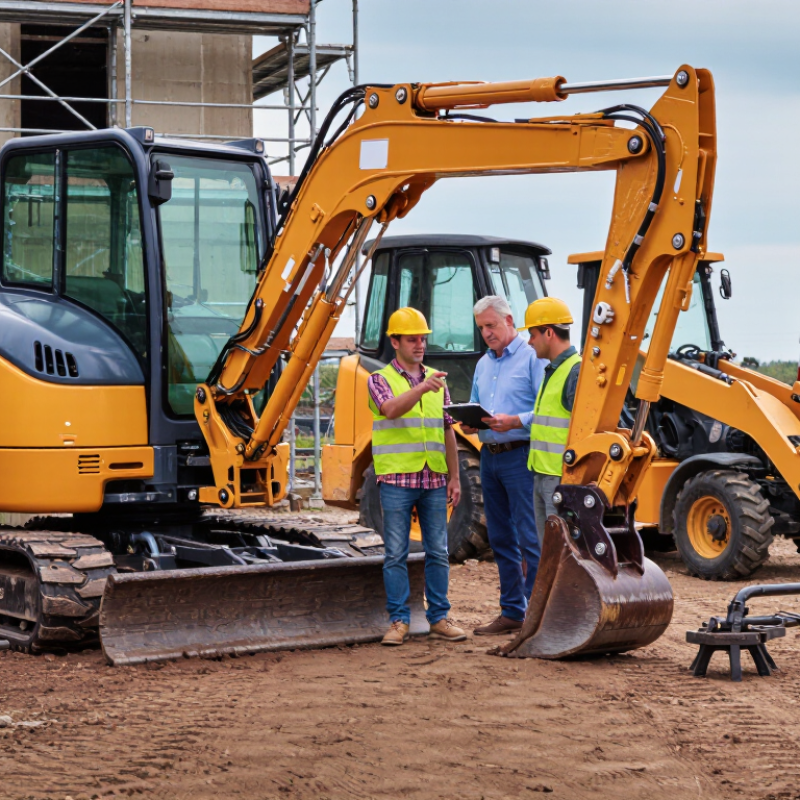
Top 10 Tips for Selecting Small Construction Equipment?

Define Job Scope: Match Machine Type, Capacity, and Site Conditions

Selecting small construction equipment starts with the job, not the catalogue. Define the work clearly before comparing machines. Will you dig narrow trenches, move soil, drill concrete, or lift materials? Each task requires a different machine type, attachment, and operating method. I have seen crews choose compact equipment by appearance alone. That decision often creates delays.

Match capacity to the real workload. A machine that is too small may overheat, struggle on slopes, or require repeated passes. An oversized unit may damage paving, exceed access limits, or waste fuel. Measure doorway widths, turning areas, trench depths, and transport routes. Check the working height near cables, roofs, and tree branches. On soft ground, review machine weight and track or tire pressure carefully. Site conditions matter as much as rated power.

Operator experience also affects the choice. A simple control layout can reduce mistakes during precise work. Ask whether the operator has used similar equipment in tight spaces. Review maintenance records, inspection logs, attachment condition, and operating limits. I once underestimated how quickly wet clay would build around a compact attachment. The machine was suitable on paper, but the ground changed the plan. A short site trial may reveal poor visibility, unstable footing, or limited reach before those problems become expensive.

Verify Lift, Reach, and Rated Capacity Under ISO 14397-1 Testing

Top 10 Tips for Selecting Small Construction Equipment?

Small construction equipment can look capable in a showroom, yet performance changes sharply with the attachment and load position. Verify lift height, forward reach, and rated capacity using test data aligned with ISO 14397-1. This standard provides a consistent method for assessing loader stability and operating performance. It does not guarantee safe capacity on every jobsite. Ground slope, tire pressure, hydraulic condition, and uneven loads still matter.

Tip: Ask for the rated operating capacity at your intended lift height and load center. A machine may lift a stated weight near the ground but handle less at full reach. Check whether the figures apply to the exact bucket, forks, or attachment you will use. Attachment weight reduces useful capacity. Measure the load’s center of gravity, not only its total weight. Then compare that figure with the published rating.

Tip: Watch a practical demonstration, if possible. Place the machine on firm, level ground and observe lifting, reaching, braking, and lowering. Listen for hydraulic strain and watch for tire unloading or frame movement. Do not treat a smooth demonstration as final proof. Field conditions are rarely perfect. I have seen capacity decisions based on brochure numbers alone, and that assumption often needs correction. Request the test configuration, rated load, reach measurement, and inspection date. Recheck these details before purchase, especially when daily loads vary.

Top 10 Tips for Selecting Small Construction Equipment? - Verify Lift, Reach, and Rated Capacity Under ISO 14397-1 Testing

No. Selection Tip Data to Compare Practical Screening Value Verification Method
1 Define the heaviest routine load Load mass, attachment mass, material density, and load frequency Select equipment with a rated operating capacity at least 1.25 × the planned routine load. Use a larger margin when the load is irregular, wet, or difficult to control. Weigh representative loads and add the attachment weight before comparing with the rated operating capacity.
2 Confirm the ISO 14397-1 rating basis Tipping load, hydraulic lift capacity, rated operating capacity, test configuration, and load position The stated rated capacity should be based on the applicable ISO 14397-1 test method and should reflect the exact machine configuration. Request the test report or technical specification. Check that the published rating uses the lower limiting value from stability and hydraulic lift capability.
3 Match lift height to the discharge point Maximum hinge-pin height, bucket or fork clearance, and truck-side or hopper height Required clearance should generally exceed the receiving point by at least 150 mm to allow for uneven ground and load movement. Measure the actual receiving height and compare it with the lift chart at the required attachment angle, not only the maximum lift-pin height.
4 Check forward reach at full lift Reach at the required dump height, load-center distance, and attachment angle Allow at least 150 mm of horizontal clearance from the obstacle or container edge where site conditions permit. Use the manufacturer’s lift-and-reach chart and verify the measurement at the actual load center; maximum reach at ground level is not sufficient.
5 Deduct the attachment and accessory weight Rated operating capacity, attachment mass, coupler mass, and payload Usable payload = rated capacity − attachment mass − coupler mass. A heavy fork carriage or specialized tool can reduce payload by several hundred kilograms. Use certified attachment weights and recalculate capacity for every attachment configuration.
6 Verify the load center Distance from the attachment face or fork heel to the load center Fork applications commonly use a 500 mm load center, but long or bulky loads may place the center farther forward and reduce practical capacity. Compare the actual center of gravity with the capacity chart. Do not apply a 500 mm rating to a 700 mm or 1,000 mm load center.
7 Check hydraulic lift performance Hydraulic lift capacity, breakout force, lift time, and capacity at full height A small loader may lift its rated load near the ground but have less usable capacity at full height; the required load should remain stable throughout the lift cycle. Review the lift-force chart at ground level, mid-height, and maximum height. Conduct a controlled functional test with the intended attachment.
8 Allow for ground and slope conditions Operating surface, slope, tire or track configuration, and travel distance with load ISO test ratings are controlled reference values; rough, soft, or sloped ground can reduce stability. Plan to operate on firm, reasonably level ground for rated lifting. Inspect the route, measure significant slopes, and apply the site risk assessment and equipment operating limits.
9 Compare dimensions and visibility Overall width, turning radius, transport height, ground clearance, and operator sight lines For confined work, keep at least 150 mm side clearance where possible and verify that the transport height fits the available route and door opening. Measure the narrowest access point, turning area, overhead obstruction, and visibility zone with the selected attachment installed.
10 Validate documentation and re-test requirements Capacity chart revision, inspection records, attachment approval, overload protection, and maintenance history Reject or quarantine equipment when the capacity chart is missing, unreadable, inconsistent with the attachment, or unsupported by current inspection records. Confirm the serial-number-specific manual, inspection date, hydraulic condition, safety devices, and any local statutory examination requirements before purchase or rental.

Note: Screening values are practical planning references, not substitute ratings. The applicable ISO 14397-1 result, the equipment manufacturer’s current capacity chart, attachment instructions, local regulations, and the site risk assessment always take precedence.

Check EPA Tier 4 Final Standards for 19–560 kW Diesel Engines

Choosing small construction equipment requires more than comparing horsepower and purchase prices. For diesel engines rated from 19 to 560 kW, check compliance with EPA Tier 4 Final standards. These standards significantly reduce particulate matter and nitrogen oxide emissions from nonroad engines. Confirm the engine’s emissions label, certification details, and rated power before ordering. A sales sheet alone may not provide enough evidence.

Tip 1: Match the engine output to the job. An oversized engine can waste fuel and increase operating costs. An undersized engine may struggle under continuous loads, especially during excavation or material handling. I have found that reviewing actual duty cycles gives better results than relying on peak horsepower. That step is often skipped.

Tip 2: Inspect the emissions system. Tier 4 Final equipment may use a diesel particulate filter, selective catalytic reduction, exhaust gas recirculation, or combined systems. Ask how regeneration works, how fluids are stored, and what maintenance access looks like. A blocked service area can turn a routine inspection into expensive downtime. Check the operator display, too.

Tip 3: Consider the worksite environment. Dust, cold starts, short operating cycles, and long periods of idling can affect emissions-system performance. Request the operation and maintenance manual, service intervals, and fault-code procedures. Verify that technicians can support the engine in your region. Certification is important, but practical support matters just as much. EPA requirements can vary by engine application, so confirm the exact certification before purchase.

Screen Safety Features Against OSHA 1926.600 and 1926.601

Top 10 Tips for Selecting Small Construction Equipment

Screen Safety Features Against OSHA 1926.600 and 1926.601

Small equipment still creates serious exposure. The U.S. Bureau of Labor Statistics reported 1,075 fatal work injuries in construction during 2023, with a rate of 9.6 deaths per 100,000 full-time workers. That figure makes equipment screening more than a purchasing exercise. It is a field-control decision.

Check whether guards cover belts, chains, blades, and other moving parts under OSHA 1926.600. Confirm that compact loaders and similar machines include suitable rollover protection and seat belts. Inspect the operator’s sightline from the actual working position, not from a brochure. Rear visibility matters. Under 1926.600 and 1926.601, equipment with obstructed rear views generally needs a reverse alarm or a trained observer. The alarm must be audible above surrounding noise.

Do not stop at the alarm. Test service brakes, parking brakes, steering, lights, mirrors, and warning devices before delivery. OSHA 1926.601 also addresses motor-vehicle safeguards, including braking systems and reverse movement. CPWR’s Data Center identifies struck-by hazards as a persistent source of construction deaths and injuries. A quiet alarm is a failure. So is a blocked camera lens. On busy sites, workers may wear hearing protection, making visual signals important. I would also record daily inspection results, although paperwork alone proves little. A practical trial with a spotter can reveal blind zones, delayed braking, or controls that feel awkward. Those details are easy to overlook.

Compare Fuel, Maintenance, Rental, Transport, and Resale Costs

Top 10 Tips for Selecting Small Construction Equipment

The purchase price rarely tells the full story. On a recent renovation project, my first cost estimate was wrong because fuel use seemed minor. A compact machine running eight hours daily can consume more fuel than expected, especially in heavy soil. Check hourly fuel consumption, tank size, and local fuel prices before choosing. Electric options may reduce operating costs, but charging time and site power must be practical.

Maintenance costs deserve close attention. Ask for service intervals, filter prices, common repair times, and technician availability. A low-cost machine is not economical if one missing part stops work for three days. Keep a simple maintenance record. It exposes repeated expenses, although I sometimes recorded repairs too late. Rental rates can be useful for short projects, seasonal work, or uncertain demand. Compare daily and weekly rates, delivery fees, deposits, damage policies, and idle-day charges. Cheap rental terms can become expensive when the schedule changes.

Transport is another overlooked cost. Measure gates, ramps, trailers, and storage doors before selecting equipment. A machine that needs special hauling may add permits, labor, and loading time. Resale value also matters. Choose equipment with clear service records, moderate operating hours, and strong demand in your area. Avoid paying extra for features your crew will rarely use. Practical value beats impressive specifications.

FAQS

Why should I check testing aligned with ISO 14397-1?

It offers a consistent way to assess lift performance, reach, and rated capacity. It does not guarantee safe capacity on every jobsite. Slope and uneven loads still matter.

Does rated capacity remain the same at every lifting height?

No. A machine may lift more near the ground than at full reach. Ask for capacity at your intended lift height and load center.

How should I evaluate an attachment’s effect on capacity?

Check data for the exact bucket, forks, or attachment you will use. Attachment weight reduces useful capacity. Measure the load’s center of gravity, not just total weight.

What should I observe during a practical equipment demonstration?

Use firm, level ground and watch lifting, reaching, braking, and lowering. Listen for hydraulic strain. Watch for tire unloading or frame movement. A smooth demonstration is not final proof.

Which testing details should I request before purchasing?

Request the test configuration, rated load, reach measurement, and inspection date. Recheck these details when daily loads vary. Brochure figures can mislead.

How can I estimate the real operating cost?

Compare fuel use, tank size, local fuel prices, and working hours. Heavy soil can increase fuel consumption sharply. Electric equipment may cost less, but charging access matters.

What maintenance and rental costs deserve attention?

Ask about service intervals, filter prices, repair times, and technician availability. A missing part can stop work for three days. I once recorded repairs too late. That weakened my estimate.

What transport and resale factors should influence my choice?

Measure gates, ramps, trailers, and storage doors before selecting equipment. Special hauling can add permits, labor, and loading time. Choose machines with service records and moderate hours. Useful features beat impressive specifications.

Conclusion

Selecting the right compact machinery can improve productivity, control costs, and reduce risks on smaller job sites. This guide explains how to select equipment for small construction projects by first defining the work scope, materials, terrain, access limits, and expected workload. Choose a machine type and capacity that fit the task without creating unnecessary transport, fuel, or operating expenses. Confirm lift height, reach, and rated capacity using reliable performance data aligned with ISO 14397-1 testing, especially when handling loads or working in confined areas.

The guide also highlights the importance of checking diesel engines against applicable EPA Tier 4 Final requirements for engines rated from 19 to 560 kW. Safety features should be reviewed against OSHA requirements for construction equipment, including safeguards related to operation, visibility, stability, and transportation. Finally, compare the complete ownership or rental cost, including fuel use, scheduled maintenance, delivery, storage, repairs, and potential resale value. A balanced evaluation helps ensure the selected equipment is safe, practical, efficient, and financially suitable for the project.

Amelia

Amelia

Amelia is a seasoned marketing professional with a wealth of expertise in our company’s core offerings. With an unwavering passion for driving growth and innovation, she plays a pivotal role in shaping our marketing strategies and enhancing brand visibility. A key aspect of her responsibilities......