Understanding what is the difference between various excavation systems requires more than comparing machine prices. China’s excavation industry serves soft soil, dense clay, fractured rock, and urban construction sites. Each condition demands a different balance of cutting force, reach, stability, and operating speed. A compact excavator may fit beside a narrow road. A large hydraulic excavator suits deep foundations, quarries, and heavy earthmoving. The visible machine is only part of the system. Attachments, pumps, control software, transport planning, and maintenance support also shape performance.
In practical evaluations, engineers examine bucket capacity, breakout force, cycle time, fuel use, and undercarriage durability. They also check whether local technicians can diagnose hydraulic leaks and replace common wear parts. Chinese systems often offer broad configuration choices and competitive manufacturing costs. However, lower purchase cost does not automatically mean lower lifetime cost. A poorly matched bucket can increase fuel consumption and slow production. A powerful machine may still underperform on unstable ground. That detail is easy to miss. Reliable comparisons should use site data, not catalogue claims alone. Independent testing, service records, operator feedback, and warranty terms provide stronger evidence.
This guide compares major China excavation systems through their design, application, efficiency, and support requirements. It also considers compromises, because every system has limits. The best choice depends on geology, project scale, access conditions, regulations, and available expertise. Careful selection protects productivity, workers, and long-term investment.
China uses several excavation systems, chosen according to soil, groundwater, depth, and nearby structures. Cut-and-cover excavation remains common for underground stations and utility corridors. Workers excavate from the surface, install the structure, and restore the road above. It is practical, but traffic disruption can be severe.
Diaphragm wall systems create reinforced concrete walls before deep excavation begins. These walls resist earth pressure and limit groundwater movement. Steel sheet piles offer faster installation for temporary works, especially near rivers or shallow foundations. Secant pile walls use overlapping concrete piles and provide stronger stiffness in crowded urban areas. Their performance depends heavily on construction accuracy.
Braced excavation systems add steel struts or concrete supports inside the pit. Anchored systems transfer pressure into the surrounding ground, where local regulations and property conditions permit. Top-down excavation builds upper slabs early, reducing wall movement and reopening roads sooner. Experienced engineers often combine methods, such as diaphragm walls with internal bracing and groundwater pumping.
Site investigation decides more than drawings do. Fine sand can flow unexpectedly. Old foundations may not appear on records. No method is perfect. A design that looks efficient on paper may become costly after rainfall or settlement appears. Monitoring instruments should track wall movement, groundwater levels, nearby buildings, and road vibration throughout construction. Clear records and timely adjustments are essential for dependable excavation work in China.
China uses several excavation systems for urban infrastructure, railways, utilities, tunnels, and underground structures. The chart compares their practical suitability by engineering characteristic on a 1–5 scale, where 5 indicates a stronger fit.
Open-cut and cut-and-cover methods are effective where surface access is available, but they can cause greater disruption. Shield tunneling and pipe jacking are commonly selected for urban areas because they limit surface disturbance. Drill-and-blast excavation is adaptable to complex rock conditions and irregular underground geometries.
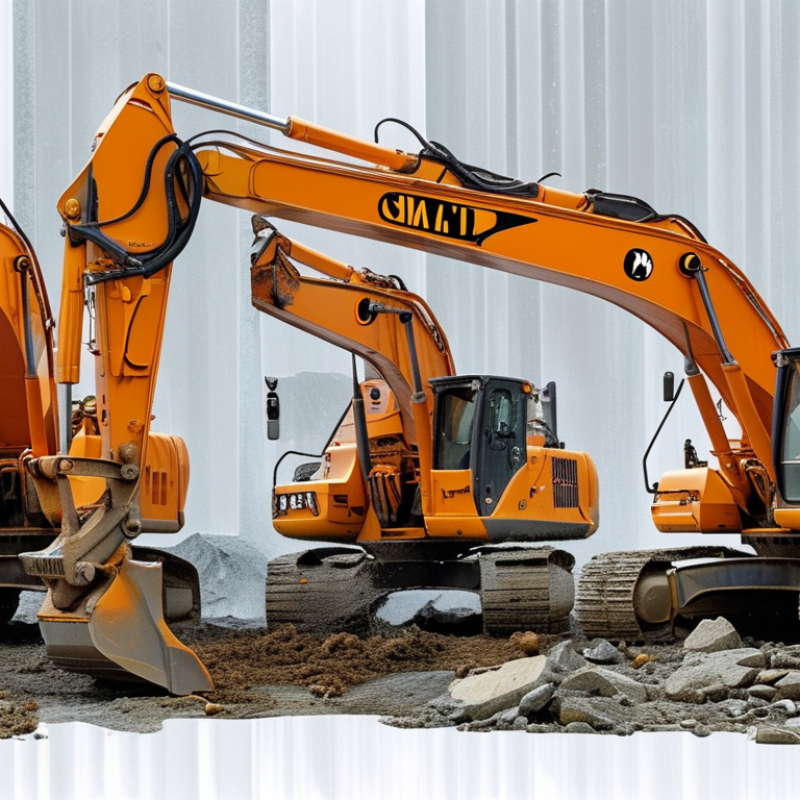
China excavation systems differ mainly in hydraulic design, control technology, chassis structure, and attachment compatibility. Their core components include an engine or electric motor, hydraulic pump, control valves, cylinders, swing mechanism, tracks, boom, arm, and bucket. The pump converts engine power into hydraulic flow. Control valves then direct oil to each actuator. This process moves the boom, arm, and bucket with controlled force.
Compact systems suit narrow sites and lighter trenching work. Medium systems balance digging depth, transport needs, and fuel consumption. Large systems provide greater breakout force for mining, foundations, and heavy earthmoving. Electric versions can reduce local noise and exhaust emissions. However, charging access and battery weight require careful planning. Automation may improve precision, but it cannot replace skilled inspection. Soil conditions, operator habits, and maintenance quality often affect performance more than advertised specifications.
Tips: Check hydraulic response before purchase. Watch for delayed bucket movement, uneven track speed, or excessive oil temperature. Inspect hose joints for dampness after a working cycle. Ask for verified load charts, service records, and component test results. Do not compare machines by engine power alone. A stronger pump can increase output, but poor cooling may shorten service life. No system is perfect. A practical choice matches the machine to local soil, workload, transport limits, and available technical support.
What Is the Difference Between China Excavation Systems?
China excavation systems differ mainly by ground conditions and working space. In soft soil, excavators use wider buckets and controlled digging cycles. Clay can cling to teeth, while sandy soil may collapse quickly. Engineers often add shoring, dewatering, or geotechnical monitoring. It gets messy. The China Statistical Yearbook 2024 reported an urbanization rate of 66.16% in 2023. This growth increases excavation near roads, utilities, and occupied buildings.
Rock excavation requires stronger planning. Hard rock may need hydraulic breakers, ripping, or carefully controlled drilling methods. Rock changes everything. The USGS Mineral Commodity Summaries 2024 estimated China’s cement output at about 2.1 billion metric tons in 2023. That figure reflects the enormous scale of related quarrying, foundation, and infrastructure work. However, cement demand does not directly measure excavation volume. Treating it as a perfect indicator would be careless.
Urban excavation is usually the most constrained method. Compact equipment reduces access problems, but productivity can fall sharply. Contractors must control vibration, dust, noise, and settlement. Space is unforgiving. Deep excavations may require retaining walls, staged removal, and real-time displacement readings. Field teams still make wrong assumptions when soil reports are incomplete. A machine suited to open ground can become inefficient beside a subway line or aging building. The best system is therefore selected from soil strength, rock condition, groundwater, depth, and surrounding risk—not machine size alone.
| Excavation System | Typical Ground Conditions | Primary Working Method | Typical Excavation Depth or Scale | Main Advantages | Main Limitations | Common Applications in China |
|---|---|---|---|---|---|---|
| Open-Cut Excavation | Soft to medium soils, fill, clay, silt, sand, and weathered ground | Soil is removed from the surface using excavators, loaders, trucks, and temporary or permanent slopes. | Commonly used for shallow to medium-depth cuts, often up to about 10–20 m when site space permits. | Simple planning, high production rate, easy equipment access, and comparatively low unit cost. | Requires a wide working area; slope stability, groundwater, dust, and traffic disruption can be significant. | Building foundations, road corridors, reservoirs, utility trenches, and large infrastructure sites outside dense urban areas. |
| Excavation with Sloped Sides | Stable cohesive soils or granular soils where sufficient land is available | The excavation walls are cut back at a designed angle to reduce the risk of collapse. | Depth depends on soil strength, groundwater, and the approved slope angle; shallow trenches are typical. | Reduces reliance on retaining structures and provides straightforward visual inspection of the excavation. | Consumes additional land and may be unsuitable beside roads, buildings, railways, or property boundaries. | Rural construction, new town developments, wide transportation corridors, and large sites with limited neighboring structures. |
| Supported Excavation | Loose soil, saturated sand, soft clay, or ground near existing structures | Excavation is carried out in stages while retaining walls, struts, rakers, anchors, or internal bracing support the sides. | Frequently used for medium and deep excavations; urban foundation pits may exceed 10 m. | Controls lateral soil movement and allows a smaller footprint than open-cut excavation. | Higher design and construction cost; bracing can obstruct equipment movement and reduce working space. | Basements, metro stations, underground commercial spaces, and deep foundation pits in developed areas. |
| Diaphragm-Wall Excavation | Soft alluvial deposits, groundwater-bearing soil, and deep urban foundation sites | Reinforced concrete panels are constructed in a narrow trench, usually under slurry support, before internal soil removal. | Suitable for deep excavations and retaining walls commonly ranging from approximately 0.6–1.5 m in thickness. | High stiffness, good groundwater cut-off performance, and relatively low ground movement when properly designed. | Requires specialized equipment, quality control, slurry management, and adequate site logistics. | Deep basements, underground stations, large public buildings, and excavations next to sensitive structures. |
| Secant-Pile or Soldier-Pile Support | Soil requiring temporary or semi-permanent lateral support, including mixed urban ground | Overlapping piles or spaced piles with lagging form a retaining system; soil is removed in stages. | Commonly applied to medium-depth urban excavations, with depth selected through geotechnical design. | Flexible layout, phased installation, and compatibility with restricted sites and irregular boundaries. | Pile joints or gaps may require additional waterproofing; vibration and noise depend on the installation method. | Building basements, transport facilities, retaining structures, and projects close to existing foundations. |
| Rock Excavation by Hydraulic Breaking | Weathered rock, moderately strong rock, boulders, and rock layers in confined locations | Hydraulic breakers mounted on excavators fracture rock mechanically for removal and hauling. | Best suited to localized rock excavation and moderate production requirements. | Allows controlled excavation without explosives and can be used near structures with monitoring. | Lower productivity in very strong or massive rock; produces vibration, noise, and tool wear. | Foundation trenches, utility works, road widening, tunnel portals, and urban sites where blasting is restricted. |
| Rock Excavation by Controlled Blasting | Strong, massive, or highly competent rock where mechanical breaking is inefficient | Drill holes are charged and detonated in carefully designed sequences to fragment the rock. | Efficient for large-volume cuts, quarries, highways, hydropower works, and major underground projects. | High production in hard rock and effective for large excavation volumes. | Requires permits, exclusion zones, blast monitoring, vibration control, and protection of nearby assets. | Mountain highways, dams, mines, rail corridors, large cuttings, and remote infrastructure projects. |
| Tunnel Boring Machine Excavation | Long tunnels through soil, mixed ground, or rock with relatively predictable alignment | A rotating cutterhead excavates the face while the machine installs or supports the tunnel lining. | Designed for long, continuous tunnels; diameter is selected according to the required transport or utility profile. | Good control of the excavation profile, improved worker protection, and reduced surface disruption compared with open cuts. | High mobilization cost, limited flexibility for short projects, and sensitivity to changing ground conditions. | Metro lines, water-transfer tunnels, drainage systems, railway tunnels, and major utility corridors. |
| Drill-and-Blast Tunneling | Hard rock, variable rock mass, complex alignments, and tunnels requiring frequent changes in geometry | Rock is drilled, blasted, ventilated, mucked out, and supported in repeated excavation cycles. | Adaptable to long tunnels and changing cross-sections, particularly in mountainous terrain. | Flexible alignment and cross-section; effective where a tunnel boring machine is impractical. | Produces vibration, fumes, and temporary ground disturbance; progress depends strongly on rock quality and support needs. | Mountain railways, highways, hydropower tunnels, water conveyance, and underground caverns. |
| Urban Cut-and-Cover Excavation | Shallow to medium-depth urban corridors where surface access can be managed | A trench is excavated from the surface, the structure is built, and the road or ground surface is restored. | Generally used for relatively shallow underground structures compared with mined tunnels. | Efficient for stations, box structures, and short alignments; construction inspection and material delivery are straightforward. | Causes traffic, noise, utility, and business disruption; requires extensive temporary works and coordination. | Metro stations, underground road sections, utility corridors, stormwater channels, and short urban links. |
| Pipe Jacking and Microtunneling | Soft ground, groundwater-bearing soil, and utility routes beneath roads or railways | Pipes are pushed from a launch shaft to a reception shaft while the ground is excavated at the face. | Commonly used for relatively small-diameter utility crossings and medium-length alignments. | Minimizes surface disturbance, reduces traffic interruption, and provides accurate installation for utility lines. | Requires launch and reception shafts; ground obstructions, settlement, and alignment control can affect performance. | Water supply, sewerage, drainage, gas, communication ducts, and crossings beneath busy transport routes. |
| Vacuum-Assisted Excavation | Utility-dense urban ground, contaminated soil, and areas requiring precise soil removal | Air or water loosens the soil while a vacuum system removes spoil through a suction hose. | Usually used for localized excavation rather than high-volume bulk earthworks. | Improves exposure of buried utilities and can reduce accidental damage compared with conventional digging. | Slower for large volumes, dependent on specialized equipment, and subject to spoil-handling requirements. | Utility locating, daylighting, potholing, confined urban work, and sensitive excavation near existing services. |
China excavation systems differ mainly through equipment configuration, control technology, and project fit. A compact excavator suits narrow urban sites, where swing radius and transport weight matter. Large hydraulic excavators deliver deeper digging and higher bucket capacity for mines, reservoirs, and highway cuts. Long-reach booms improve slope work, but they reduce lifting stability. That trade-off is easy to overlook.
Technology changes the operator’s daily experience. Electro-hydraulic controls can coordinate boom, arm, and bucket movements more precisely. Machine guidance systems use positioning data to reduce repeated surveying and over-excavation. Telematics records fuel use, idle hours, service alerts, and operating cycles. The China Construction Machinery Industry Association reported 195,018 excavators sold in 2023, including 105,038 exported units. This export volume suggests wider demand for adaptable configurations, not one standard design. However, connected functions still depend on reliable networks and trained operators. Reality is messier.
Project applications should guide system selection. A tunneling contractor may prioritize low-clearance equipment, dust control, and remote operation. A rural road project may need quick attachment changes for breakers, grapples, and grading buckets. Mining projects require reinforced structures, stronger undercarriages, and continuous cooling performance. The International Energy Agency’s Global EV Outlook 2024 reported strong growth in electric vehicle deployment, encouraging quieter electric equipment in enclosed or urban work areas. Yet battery charging can delay shifts on remote sites. Engineers should compare duty cycles, ground conditions, maintenance access, and local power capacity before choosing an excavation system. Specification sheets alone are not enough.
China excavation systems can differ greatly in guarding, control design, ground support, and emergency access. These differences affect more than purchase price. They influence worker exposure, maintenance routines, and project delays.
A reliable system should include visible emergency stops, stable access platforms, clear operating labels, and documented inspection points. Operators need practical training, not only a translated manual. On active sites, poor visibility around rotating parts remains a common concern. Small design details matter. A missing handrail can change a routine task into a serious incident.
Environmental performance also varies between systems. Compare hydraulic fluid protection, dust suppression, noise control, and spoil-handling methods. Enclosed power units may reduce noise near homes and schools. Effective water management can prevent muddy runoff from reaching drains. However, water use itself needs monitoring. More suppression is not always better. Excess water can weaken working surfaces and increase disposal costs.
Regulatory checks should cover machinery safety, electrical protection, emissions, waste handling, and local construction requirements. Certificates are useful, but they do not replace site verification. Inspectors should confirm serial records, test results, maintenance logs, and operator qualifications. Requirements can change between regions and project types. That point is easy to underestimate. A system may appear compliant during delivery yet need modifications before operation. Careful risk assessment, independent inspection, and honest documentation provide stronger protection than attractive specifications.
Cut-and-cover excavation is common. Workers dig from the surface, build the structure, and restore the road. Traffic disruption can be severe.
Reinforced concrete walls are built before excavation begins. They resist earth pressure and limit groundwater movement. Monitoring remains necessary.
Steel sheet piles suit temporary works near rivers or shallow foundations. They install quickly. Their performance may weaken in difficult ground.
Steel struts or concrete supports resist wall movement from inside the pit. Anchors can transfer pressure into surrounding ground when conditions permit. Property limits matter.
Clay may cling to bucket teeth. Fine sand can collapse or flow unexpectedly. Engineers may need shoring, dewatering, and closer monitoring.
Hard rock may require breakers, ripping, or controlled drilling. Stronger equipment is not always better. Vibration and nearby structures still need protection.
A compact excavator can work beside roads, utilities, and occupied buildings. Its small swing radius helps. Productivity may fall sharply.
Machine guidance can reduce repeated surveying and over-excavation. Telematics records fuel use, idle time, and service alerts. Connected systems still depend on reliable networks.
Upper slabs are built early, which can reduce wall movement. Roads may reopen sooner. The method can become costly when ground conditions change.
They should review soil strength, rock condition, groundwater, depth, equipment access, and nearby risks. Rainfall can change the plan. Drawings alone are not enough.
China uses a wide range of excavation systems designed for different ground conditions, project scales, and construction environments. Common methods include open excavation, trenching, drilling and blasting, mechanical rock excavation, tunnel boring, and specialized urban excavation systems. Their differences mainly involve cutting or breaking principles, equipment configuration, excavation depth, work efficiency, and adaptability. In soil, excavators and trenching equipment often provide flexible and efficient digging, while rock projects may require heavy mechanical tools or controlled breaking techniques. Urban excavation places greater emphasis on limited space, vibration control, traffic management, and protection of nearby buildings and utilities.
Understanding what is the difference between various excavation systems requires evaluating soil and rock properties, groundwater, project design, and surrounding conditions. Key components may include cutting tools, hydraulic systems, support structures, conveyors, monitoring devices, and dust or water-control equipment. Appropriate system selection can improve productivity, stability, and cost management. At the same time, projects must follow safety procedures, environmental protection measures, waste-handling requirements, noise and dust controls, and applicable construction regulations.

Mintrix Excavator