China Top 10 Industries Using Excavation Equipment?

Time:2026-09-23 Author:Henry
0%

China’s excavation-equipment demand reflects more than construction alone. It follows infrastructure, minerals, utilities, agriculture, and urban redevelopment.

The National Bureau of Statistics of China reported that infrastructure investment, excluding electricity, increased by 4.4% in 2024. That growth supports demand for excavators, crawler loaders, trenchers, and hydraulic attachments. The USGS Mineral Commodity Summaries 2024 also recorded China’s leading role in rare-earth production. Mining and quarrying therefore remain important equipment users. Ports, railways, water projects, and renewable-energy sites add another layer of demand.

So, what industries rely on excavation equipment the most? The answer changes by region, project size, and economic cycle. Construction usually leads in machine volume, while mining often creates heavier-duty demand. Agriculture and forestry use smaller excavators, but their applications are expanding.

Chris Sleight, managing director of Off-Highway Research, has stated, “Construction equipment demand follows the work pipeline, not headlines.” That observation matters in China’s market, where government investment, property weakness, and resource development can move in opposite directions.

The ranking in this article is not perfectly fixed. That is worth admitting.

It compares China’s top ten excavation-equipment industries by project activity, machine intensity, and operational scale. Data from the National Bureau of Statistics, USGS, and industry market studies provides the foundation. Field realities provide the necessary correction. A 20-ton excavator beside a subway cut looks different from a compact machine clearing orchard drainage channels. Both reveal where excavation equipment creates practical value.
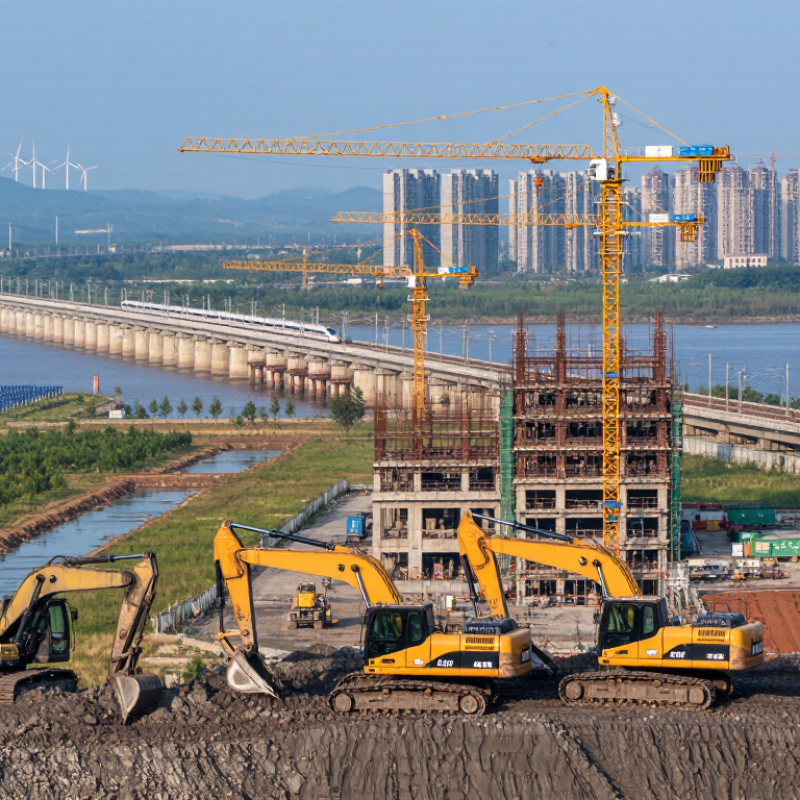
China Top 10 Industries Using Excavation Equipment?

China’s Excavation Equipment Industry: Scope and Market Overview

China’s excavation equipment industry supports construction, mining, quarrying, road building, rail projects, and urban renewal. It also serves water conservancy, utility installation, agriculture, demolition, and disaster recovery. Demand changes with infrastructure budgets, property development, resource extraction, and regional soil conditions. Large cities often require compact machines for narrow streets, while western projects may need high-capacity equipment for rocky terrain.

The market includes excavators, attachments, loaders, drilling systems, and intelligent control technologies. Contractors increasingly examine fuel use, maintenance access, operator safety, and resale value. Field experience shows that equipment performance depends heavily on soil, weather, transport limits, and operator training. Market forecasts can be useful, but no forecast is perfect. A weakness remains: some buyers compare purchase prices more carefully than lifecycle costs. Reliable decisions require verified specifications, service records, safety compliance, and realistic project schedules.

Tips: Match machine size to the worksite, not only to the project budget. Check ground pressure before entering soft soil. Test hydraulic response during a practical demonstration. Keep inspection records for filters, tracks, hoses, and attachments. Local regulations and emission requirements should be reviewed before delivery.

Top 10 Chinese Industries Using Excavation Equipment

China’s construction industry uses excavators for foundations, basements, and material handling. Road and bridge engineering depends on them for cutting slopes and preparing embankments. Mining operations use larger machines to remove overburden and load broken rock. Water conservancy projects need excavators around reservoirs, canals, and flood-control channels. Their buckets often work in wet, unstable ground. Careful machine selection matters.

Urban utility contractors use compact excavators near pipes, cables, and narrow streets. Agriculture and land-reclamation projects use them to clear drainage channels and reshape fields. Forestry operations rely on specialized attachments for trail building and site preparation. Port and coastal engineering use excavation equipment for dredging support and ground improvement. Energy infrastructure projects need machines for foundations, trenching, and access roads. Disaster-response teams also use excavators after floods, landslides, and earthquakes.

On Chinese job sites, productivity depends on more than engine power. Operators must read soil conditions, underground drawings, and weather changes. A machine that performs well on dry soil may struggle in clay. Fuel use, attachment wear, transport limits, and service access also affect real costs. Not every project chooses correctly. That judgment remains imperfect, especially when schedules are tight. Daily inspections, trained operators, and documented maintenance reduce avoidable downtime and safety risks. Excavation work still demands patience.

Top 10 Chinese Industries Using Excavation Equipment

Excavators are widely used across China's construction, infrastructure, mining, utilities, agriculture, and environmental sectors. The comparative index below reflects typical equipment application intensity, based on the scale and frequency of excavation work in each industry.

The index uses construction and infrastructure activity as the reference level of 100. It is a comparative industry-use indicator rather than a measurement of company sales or machine-unit ownership.

Key Applications of Excavators Across These Industries

Across China’s construction industry, excavators prepare foundations, remove spoil, and place materials with controlled attachments. Road and bridge crews use them for drainage channels, embankments, and slope maintenance. In mining and quarrying, larger machines strip overburden, load broken material, and maintain haul-road edges.

Agricultural contractors reshape fields, dig irrigation ditches, and remove stubborn roots. Forestry teams clear access routes and prepare land for replanting. Utility projects rely on excavators for water, gas, and cable trenches. Operators must control bucket movement near buried services. Small mistakes can become expensive.

Demolition crews use hydraulic tools to dismantle structures in planned sections. Waste and recycling facilities handle soil, concrete, and mixed materials with sorting attachments. Landscaping teams create ponds, retaining walls, and planting beds. Disaster-response units clear collapsed roads and remove flood debris. Speed matters.

Effective excavation depends on more than machine size. Experienced supervisors match attachments, soil conditions, and lifting limits before work begins. Daily inspections should cover hydraulics, tracks, pins, and warning systems. Ground pressure also matters on soft farmland or wet recovery sites. That assumption is often wrong. Field observations frequently reveal hidden pipes, unstable edges, or poor access planning. Even experienced crews can misjudge changing ground conditions. Careful planning reduces damage, delays, and unnecessary rework.

Factors Driving Excavation Equipment Demand in China

China Top 10 Industries Using Excavation Equipment

Factors Driving Excavation Equipment Demand in China

China’s construction sector remains the largest demand source for excavation equipment. Urban renewal, metro expansion, and housing repairs require machines that work efficiently in tight spaces. Demolition sites often need compact excavators, while highway projects require heavier digging capacity. Rural road upgrades create another steady market.

Mining, energy, water management, and agriculture also support equipment demand. Open-pit mines need reliable machines for long operating cycles and hard ground. Hydropower and flood-control projects require excavation beside rivers, where soil conditions can change quickly. Large farms use smaller equipment for drainage, land preparation, and pond construction. These applications favor fuel efficiency, simple maintenance, and strong hydraulic performance.

Infrastructure investment is not the only driver. Labor shortages, rising wage costs, and stricter project schedules encourage contractors to mechanize more tasks. Government spending on urban resilience has increased demand for trenching and underground utility work. Equipment rental is also growing because smaller contractors cannot justify full ownership. This lowers the entry barrier.

But demand is uneven. Regional budgets, construction cycles, and property conditions can change quickly. A machine suitable for dry northern soil may perform poorly in wet southern terrain. Buyers need service access, operator training, and realistic lifecycle cost estimates. Cheap acquisition can become expensive maintenance. That lesson is easy to overlook. Better data on utilization rates would improve purchasing decisions, yet many contractors still rely on rough experience rather than precise records.

Technology Trends and Future Developments in Excavation Equipment

China’s ten major excavation-equipment users include construction, mining, road building, railways, water management, energy, agriculture, demolition, ports, and municipal services. Each sector now demands safer, cleaner, and more measurable operations. The China Construction Machinery Industry Association reported 195,018 excavators sold in China in 2023, including strong export activity. That volume creates a large testing ground for digital controls and low-carbon power systems.

Technology is changing the operator’s daily work. Machine-control systems use GNSS, cameras, and sensors to guide bucket depth within a few centimeters. Telematics can record fuel use, idle time, hydraulic pressure, and maintenance warnings. Remote operation is useful in unstable mines and demolition zones. It also changes training needs. Skill still matters. Software cannot read every muddy slope correctly.

Grand View Research estimated the global excavator market at about 63.14 billion US dollars in 2023, with a projected 4.6% annual growth rate through 2030. Electric and hybrid excavators are expanding in cities, where noise and exhaust restrictions are tighter. Battery limits remain a practical weakness, especially during long shifts. Predictive maintenance may reduce unexpected downtime, but poor sensor data can produce confident errors. Future fleets will likely combine digital twins, semi-autonomous digging, and cloud-based fleet analysis. The less visible development is better data discipline. Without it, advanced equipment becomes an expensive dashboard.

China Top 10 Industries Using Excavation Equipment? - Technology Trends and Future Developments in Excavation Equipment
Industry in China Typical Excavation Applications Common Equipment Configuration Main Demand Drivers Technology Trends Current Technology Adoption 2025–2030 Development Outlook
Residential and Commercial Construction Foundation pits, basements, site grading, soil removal, demolition and material handling. Mini excavators, crawler excavators, wheeled excavators, hydraulic breakers and augers. Urban redevelopment, housing construction, commercial projects and renovation work. Compact electric machines, machine-control systems, telematics, low-noise operation and attachments. High Greater use of compact, low-emission equipment in dense urban areas, together with more connected fleet management.
Roads, Bridges and Expressways Earthworks, embankments, drainage trenches, slope preparation, bridge foundations and roadside maintenance. Large crawler excavators, long-reach excavators, dozers, loaders and hydraulic breakers. National and provincial transport upgrades, maintenance of existing infrastructure and regional connectivity projects. GNSS-based machine guidance, 3D grading control, remote monitoring and fuel-efficiency optimization. High Automation will expand on repetitive earthmoving tasks, while predictive maintenance and digital project control become more common.
Railways and Urban Rail Transit Railbed excavation, station construction, tunnel approaches, utility relocation and metro cut-and-cover work. Medium and large excavators, compact excavators, tunnel attachments, breakers and specialized lifting tools. High-speed railway expansion, urban rail systems, intercity transport and station redevelopment. Remote operation in hazardous zones, BIM-linked construction planning, positioning systems and dust-control attachments. High More digitally coordinated excavation will support safer work around tunnels, existing structures and underground utilities.
Mining and Quarrying Overburden removal, mineral extraction, bench preparation, haul-road construction and quarry face work. Large hydraulic excavators, heavy-duty buckets, breakers, ripper attachments and high-capacity haulage systems. Demand for coal, iron ore, non-ferrous metals, construction aggregates and strategic mineral resources. Autonomous or assisted operation, payload monitoring, digital terrain models, remote diagnostics and energy management. High Productivity and safety systems will advance, with gradual electrification in suitable surface-mining and quarry applications.
Water Conservancy and Flood-Control Projects Reservoir construction, canal excavation, river dredging, embankment work, sediment removal and flood-control channels. Long-reach excavators, amphibious excavators, dredging attachments, crawler excavators and heavy breakers. Flood resilience, water security, irrigation, river restoration and reservoir improvement programs. Remote-controlled equipment, hydraulic monitoring, positioning technology and attachments designed for wet or unstable ground. Medium Demand for specialized machines will grow as projects require better environmental protection and operation in difficult terrain.
Municipal Utilities and Underground Infrastructure Water and sewer trenches, gas pipelines, district heating, telecommunications ducts and utility maintenance. Mini excavators, compact track loaders, wheeled excavators, trenchers and vacuum-assisted tools. Urban utility renewal, underground cable installation, smart-city projects and aging network replacement. Electric compact equipment, zero-tail-swing designs, utility mapping, collision avoidance and remote fleet supervision. High Low-noise electric machines and precision excavation will become increasingly important for work near buildings, roads and pedestrians.
Ports, Coastal Engineering and Marine Construction Port expansion, quay-wall construction, reclamation, coastal protection, seabed preparation and dredging support. Long-reach excavators, amphibious excavators, dredging systems, large crawler excavators and heavy lifting attachments. Port modernization, coastal protection, logistics infrastructure and land-reclamation requirements. Remote operation, real-time positioning, hydraulic efficiency, corrosion-resistant components and environmentally controlled dredging. Medium More specialized and digitally controlled equipment will be used to improve accuracy and reduce disturbance to coastal ecosystems.
Agriculture, Forestry and Land Development Land leveling, irrigation channels, terracing, pond construction, forestry roads and land-reclamation work. Mini excavators, compact excavators, crawler excavators, mulchers, grapples and grading attachments. Modern agricultural infrastructure, rural development, land improvement and forestry management. Multi-purpose attachments, compact electric machines, satellite positioning and semi-automated grading. Medium Versatile compact equipment will gain share because it can work on smaller sites and perform multiple seasonal tasks.
Energy and Power Infrastructure Foundation excavation, transmission-line access, pipeline corridors, hydropower works and renewable-energy site preparation. Crawler excavators, compact excavators, long-reach machines, drilling attachments and hydraulic breakers. Grid expansion, hydropower maintenance, wind and solar development, energy-storage projects and pipeline construction. Remote monitoring, automated grading, electric equipment for enclosed or low-emission sites and digital construction coordination. High Electrification and data-driven maintenance will expand, particularly on renewable-energy and urban power projects.
Environmental Remediation and Waste Management Contaminated-soil removal, landfill closure, waste sorting, river cleanup, brownfield redevelopment and ecological restoration. Mini and medium excavators, long-reach excavators, grapples, screening buckets, shears and material-handling attachments. Soil-pollution control, landfill management, ecological restoration and stricter environmental requirements. Electric and low-emission machines, remote operation, dust suppression, material sorting and digital tracking of excavation volumes. Medium Specialized attachments, cleaner powertrains and traceable digital workflows will support safer and more sustainable remediation.
Note: The adoption levels indicate the relative maturity of digital, automated, connected or electrified excavation technologies in each application area. The outlook reflects broad sector trends rather than company-specific forecasts.

FAQS

Which industries commonly use excavation equipment in China?

Construction, mining, road building, rail projects, and urban renewal use it widely. Water conservancy, agriculture, forestry, utilities, and disaster recovery also depend on excavators. Needs vary by terrain.

How should buyers choose the correct machine size?

Match the machine to the worksite, not only the project budget. Compact equipment suits narrow streets and utility trenches. Larger machines handle rocky ground and heavy material. Oversizing can increase transport costs and ground pressure.

Why do soil and weather conditions matter?

Dry soil may support a machine well, while clay can reduce traction. Wet ground creates sinking risks near canals, reservoirs, and flood-control channels. Check ground pressure before entering soft soil. This step is easy to overlook.

What should contractors inspect before purchasing equipment?

Review verified specifications, service records, safety compliance, and maintenance history. Inspect filters, tracks, hoses, hydraulic lines, and attachments. Test hydraulic response during a practical demonstration. Paperwork alone is not enough.

What costs should buyers consider beyond the purchase price?

Consider fuel use, maintenance access, attachment wear, transport, and resale value. Service delays can make a cheaper machine expensive. Lifecycle estimates remain uncertain. Real project data helps.

Which equipment works best in narrow urban areas?

Compact excavators usually fit narrow streets and crowded utility corridors. They can work near pipes and cables with careful operation. Operators should review underground drawings before digging. Small spaces leave little room for mistakes.

How can operators reduce downtime and safety risks?

Conduct daily inspections and keep documented maintenance records. Train operators to read soil, weather, and underground conditions. Check filters, tracks, hoses, and attachments before each shift. A rushed inspection may miss a serious defect.

Are market forecasts reliable for excavation equipment decisions?

Forecasts can show demand linked to infrastructure, property, mining, and regional conditions. They cannot predict every budget change or weather disruption. Use forecasts with verified specifications and realistic schedules. No forecast is perfect.

Conclusion

China’s excavation equipment industry supports a wide range of economic activities, from large-scale infrastructure construction to specialized land development. The top 10 industries using excavation equipment include transportation infrastructure, residential and commercial construction, mining, energy projects, water conservancy, agriculture, landscaping, municipal services, environmental restoration, and disaster-response operations. Excavators are used for digging foundations and trenches, moving earth and materials, preparing roads, clearing land, maintaining waterways, and completing demolition or recycling-related tasks.

When considering what industries rely on excavation equipment the most, infrastructure, construction, mining, and public works generally stand out because of their continuous need for earthmoving and site preparation. Demand in China is driven by urbanization, regional development, replacement of aging machinery, and the need for greater productivity and safety. Future development is expected to focus on fuel efficiency, electric and hybrid power, intelligent control systems, remote operation, automation, and digital fleet management. These advances can improve precision, reduce operating costs, and support more sustainable project execution across multiple industries.

Henry

Henry

Henry is a dedicated marketing professional with a profound expertise in the company's offerings. With years of experience in the industry, he possesses an impressive understanding of the market dynamics and consumer behaviors that drive success. Henry is committed to sharing his insights through......