In 2026, construction machines still depend on hydraulic systems for controlled force in tight spaces. That matters on a crowded jobsite. An excavator can lift a loaded bucket, turn, and lower it with precise control. Hydraulic cylinders and motors also help power loaders, cranes, and concrete equipment. If you are asking “what are the advantages of hydraulic systems in construction,” the practical answer includes strong force, smooth movement, and flexible machine design.
Fluid-power author John Watton’s engineering work offers a useful principle. A fair paraphrase is: “Pressurized fluid transfers power to produce controlled movement where a machine needs it.” This explains why hydraulic components can deliver substantial force without taking up the space of many mechanical alternatives. Operators can make small adjustments, while attachments can often be changed for different tasks. Less downtime matters.
Still, the benefits depend on good design and care. A worn hose can leak. Contaminated fluid can damage components, and overheated oil may reduce performance. Maintenance is part of the bargain. On site, clean connections, scheduled inspections, and the right fluid help protect equipment and workers. Hydraulic systems are powerful, but they are not effortless. This introduction looks at where they excel, what limits them, and how contractors can judge their value in 2026.
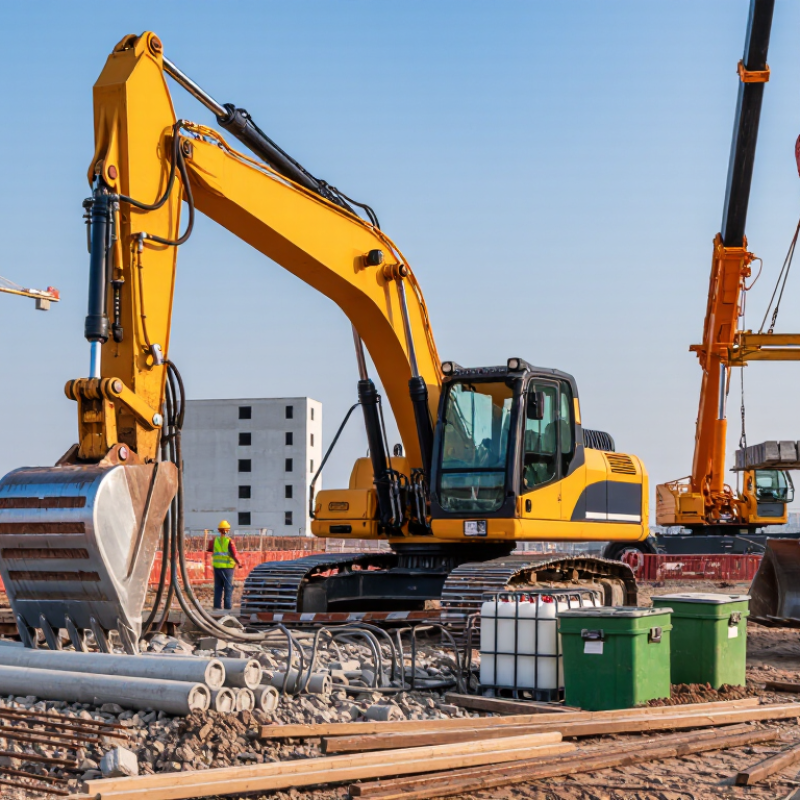
A hydraulic system uses pressurized liquid to transfer power. In construction equipment, a pump moves oil through hoses and valves. The valves direct the flow, while cylinders or hydraulic motors turn it into movement. That is the basic cycle. On an excavator, moving the control lever changes the oil flow. The boom cylinder then extends or retracts, lifting or lowering the arm. The operator can make small adjustments, even while the machine carries a heavy load.
Pressure does the heavy work. A compact pump can help move a large bucket, but the system depends on clean fluid, sound seals, and correctly set controls. On a muddy site, a damaged hose or a small leak can slow work and create a slip hazard. Regular inspections matter. Look for worn hose covers, loose fittings, and oil around cylinder rods. Hydraulic systems can feel precise, yet heat, contamination, and wear affect performance. This overview is simplified; real machines use different circuit designs. Hydraulics are powerful, but not magic.
Hydraulic power on a construction site begins with a pump, which pressurizes oil to transfer energy. The pump draws fluid from a reservoir, where it can cool and release trapped air. Valves control the fluid’s direction and pressure, helping operators manage lift, reach, and speed. Together, these parts turn engine power into controlled movement.
At the working end, cylinders create straight-line force for lifting or pushing. Hydraulic motors provide rotation for tools and attachments. Hoses and rigid lines carry fluid between components, so secure fittings matter when equipment vibrates over rough ground. Filters capture particles that could wear pumps or valves. Check for leaks. A small leak can lower performance and create a slip hazard. That sounds simple. It isn’t always; heat, contamination, and worn seals can produce similar symptoms.
Tips: Check fluid level and hose condition before a shift. Look for cracked covers, loose fittings, or milky fluid, and follow the machine’s service instructions. Never inspect a pressurized line by hand; a suspected leak needs trained attention.
| Topic | Core Component or Principle | How It Works | Construction-Site Benefit | Practical Consideration |
|---|---|---|---|---|
| High force from compact equipment | Hydraulic pump and actuator | The pump supplies fluid flow; pressure acting on a cylinder piston or motor produces force or torque. | Supports heavy-duty tasks such as lifting, digging, clamping, and pushing without requiring a direct mechanical drive to each working part. | Available force depends on system pressure and actuator size. Components must be selected within their rated limits. |
| Controlled movement | Directional and flow-control valves | Directional valves route fluid; flow-control valves regulate flow, which affects actuator speed. | Enables operators to manage motions such as boom raising, bucket curling, steering, and attachment operation. | Control response depends on valve design, fluid condition, system setup, and operator input. |
| Flexible power routing | Hoses, tubes, and fittings | Pressurized fluid travels through connected lines between the pump, valves, and actuators. | Allows power to reach moving or spatially separated parts of machines, including articulated arms and attachments. | Inspect for abrasion, leaks, damage, and secure connections. Replace lines with correctly rated parts and follow safe depressurization procedures. |
| Pressure management | Pressure-relief valve | When pressure reaches its set point, the valve opens a path for fluid to reduce or limit further pressure rise in the protected circuit. | Can help protect hydraulic components from excessive pressure when correctly selected and maintained. | It is not a substitute for machine guards, operating procedures, or other safety devices. Settings should follow equipment specifications. |
| Steady fluid supply | Reservoir and hydraulic fluid | The reservoir stores fluid and helps accommodate volume changes, release entrained air, and allow heat to dissipate. Fluid transmits power and also lubricates components. | Provides a supply of working fluid for repeated machine movements during normal operation. | Use the specified fluid and maintain the correct level. Keep the system clean and investigate unusual fluid loss or foaming. |
| Reduced contamination damage | Hydraulic filters and breathers | Filters capture particles from fluid; reservoir breathers help limit contaminants entering as air moves in and out. | Helps protect pumps, valves, and actuators from contamination-related wear and sticking. | Follow the equipment service schedule and use the specified filter type. A filter does not remove every form of contamination. |
| Linear and rotary motion | Hydraulic cylinders and motors | Cylinders convert fluid power into linear movement; hydraulic motors convert it into rotary movement. | Powers machine functions such as lifting, track or wheel drive, rotation, and attachment movement. | Check for leaks, damaged seals, abnormal noise, or reduced movement, and service according to the machine manual. |
| Thermal management | Hydraulic cooler and heat exchanger | Transfers heat from hydraulic fluid to air or another cooling medium when the system design requires it. | Helps maintain fluid operating conditions during demanding work and extended operating cycles. | Keep cooling surfaces clear and investigate recurring overheating; heat can also result from incorrect settings, restrictions, or internal leakage. |
| Serviceability and uptime | Modular components and maintenance access | Pumps, valves, filters, lines, and actuators can be inspected and serviced as distinct parts of a system. | Routine inspections and timely repairs can help reduce avoidable downtime on active job sites. | Actual service time depends on fault location, access, parts availability, and technician capability; hydraulic repairs require cleanliness and pressure-safety precautions. |
Hydraulic systems remain central to construction equipment in 2026 because they deliver high force in a compact space. Pressurized fluid moves an excavator’s boom, tilts a loader bucket, or powers a compactor. On a crowded site, smooth control helps an operator place a bucket close to a trench edge without jolting the machine. That matters.
Hydraulics also support a wide range of attachments. A machine can switch from lifting pallets to breaking concrete when its hydraulic flow and pressure match the tool’s requirements. This flexibility can reduce the need for separate equipment and help crews adapt as work changes. Well-maintained systems can provide consistent movement through long shifts, though performance depends on proper setup and care.
The benefits are not automatic. Hydraulic systems can lose efficiency when fluid overheats, filters clog, or hoses develop leaks. A small leak may leave a slick patch beneath a parked loader and signal a fault that needs prompt attention. Regular inspections, clean fluid, and correct operating practices help protect uptime. They also take time and disciplined recordkeeping, which busy crews may overlook. Hydraulic power is useful, but it still asks for careful maintenance.
On a construction site, hydraulics turn engine power into controlled movement. Excavator cylinders curl a bucket through packed soil, while track drives help machines climb uneven ground. Bulldozers use hydraulic blades to push and grade material. Loaders lift gravel into waiting trucks. The work is physical and precise.
Hydraulic systems also power concrete pumps, breakers, compactors, and crane outriggers. A breaker sends repeated force into old concrete; a compactor presses loose soil into a stable layer. The Federal Highway Administration’s 2023 National Bridge Inventory lists more than 600,000 U.S. bridges, many requiring inspection and maintenance. That scale helps explain the steady demand for equipment that can dig, lift, break, and position materials. The U.S. Census Bureau recorded about $1.98 trillion in construction spending in 2023, underscoring the size of the sector using such machinery.
The benefits depend on upkeep. Operators should check hoses, fittings, fluid levels, and cylinder seals before work begins. A small leak can reduce lifting control, leave slippery ground, and interrupt a shift. Dust is unforgiving. Heat, vibration, and abrasive debris also wear components, so hydraulic power is not automatically efficient or reliable. A machine may feel responsive at the controls, yet still need slower operation when the load shifts or the ground gives way. That detail is easy to overlook.
Hydraulics move heavy loads and deliver controlled force across a range of construction equipment.
Bars show the number of example hydraulic functions listed for each equipment type, not a standardized industry rating. Actual configurations vary by machine.
Choosing a construction hydraulic system starts with the work, not the machine’s peak pressure. Match flow and pressure to the attachment, expected duty cycle, and typical load. Check operating temperatures, hose routing, available service space, and fluid compatibility. A system that performs well on paper may struggle in dusty conditions or during repeated stop-start work. Small details matter.
The U.S. Department of Energy’s Improving Pumping System Performance sourcebook reports that pumping systems use nearly 20% of global electricity. That figure concerns pumping systems broadly, not mobile construction hydraulics, so it should not be treated as a machine-specific estimate. It does underline why efficient sizing and avoiding unnecessary flow or pressure deserve attention.
For maintenance, follow the equipment maker’s service schedule, inspect hoses and fittings for abrasion or seepage, and monitor fluid condition and filter indicators. Record recurring leaks; replacing a hose without checking its routing can invite the same failure.
Tips: Keep replacement filters and the correct fluid accessible on site. Use clean containers when topping up, and investigate unusual heat, noise, or sluggish movement promptly. A quick visual check helps, but it cannot replace scheduled inspections.
They turn engine power into controlled movement. Cylinders curl buckets, lift gravel, and move blades through soil.
Excavators dig, loaders lift, and bulldozers grade material. Concrete pumps, breakers, compactors, and crane supports use hydraulic force too.
It delivers repeated force to break old concrete. Careful positioning still matters.
Check hoses, fittings, fluid levels, and cylinder seals. Look for seepage or abrasion. Small leaks matter.
Dust, heat, vibration, and abrasive debris can speed up wear. Shifting loads or soft ground may also call for slower operation.
Match flow and pressure to the attachment, expected load, and duty cycle. Consider temperature, hose routing, service access, and fluid compatibility.
Record repeated leaks and check hose routing before fitting a replacement. A hose rubbing against a sharp edge may fail again.
No. Quick checks help, but they can miss hidden wear. Follow service schedules and investigate unusual heat, noise, or sluggish movement.
Keep replacement filters and the correct fluid nearby. Use clean containers when topping up. Small details are easy to overlook.
Hydraulic systems use pressurized fluid to transfer power, allowing construction equipment to lift, push, dig, and move heavy loads with controlled force. Pumps, reservoirs, valves, hoses, cylinders, and hydraulic motors work together to direct fluid where it is needed. In 2026, these systems remain valuable on jobsites because they deliver strong power in compact spaces, offer precise control, and can perform reliably through demanding work cycles.
The advantages of hydraulic systems in construction include efficient operation and versatility across tasks such as excavating, lifting, grading, demolition, and material handling. Choosing a system involves matching its capacity and controls to the equipment and job requirements, while considering operating conditions and ease of service. Regular inspections, clean fluid, timely filter changes, and attention to leaks and worn components help maintain performance, reduce unexpected downtime, and support safe, productive equipment use.

Mintrix Excavator